

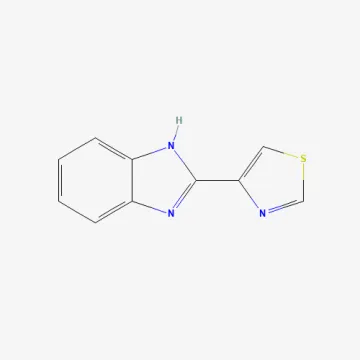
Description
Mode of action
Thiabendazole belongs to the benzimidazole chemical class and is a systemic fungicide with a broad spectrum of activity. Its uniqueness lies in its ability to penetrate plant tissues and move through the xylem, providing reliable protection for both seedlings and adult plants against infections.
The mode of action is based on inhibiting the cell division process of the pathogen. Thiabendazole suppresses the biosynthesis of tubulin protein, which is essential for the formation of microtubules in the mitotic spindle of the fungal cell, leading to the cessation of mycelial growth.
The substance exhibits both prophylactic and curative activity. Thanks to its systemic effect, it effectively suppresses internal and surface infections present on seeds as well as in the soil layer surrounding the planting material.
An important feature of thiabendazole is its high adsorption capacity, which allows the product to persist in the root zone for an extended period, protecting the crop during the critical stages of germination and root system development.
The compound possesses strong fungistatic activity, blocking fungal metabolic processes, which makes it an indispensable component in combination products for pre-sowing seed treatment.
What it targets
The primary use of thiabendazole is to combat a complex of fungal diseases in cereal crops, such as bunt (covered smut) and loose smut, various types of root and foot rots, and seed molding.
On vegetable crops, including potatoes and sugar beets, the substance is effective against phoma rot, Fusarium wilt, and various storage rots that occur during the post-harvest period.
The product is actively used as a seed treatment agent, providing protection against soil-borne pathogens that can cause seedling mortality during early stages of development.
Thiabendazole demonstrates high efficacy against pathogens from the classes of Ascomycetes, Basidiomycetes, and Deuteromycetes, making it a versatile solution for pre-sowing treatments.
- Common and loose smut of cereals
- Fusarium root rot
- Phoma rot in sugar beet
- Helminthosporium rots
- Silver scurf in potatoes
Rates and timing
Application rates of thiabendazole vary depending on the crop, pathogen pressure, and the specific formulation of the fungicide. On average, 0.4–0.6 liters of the product are used per ton of seeds for cereal treatment.
Potato treatment before storage is carried out by spraying the tubers with the working solution. It is crucial to ensure even coverage of the surface to guarantee protection against storage rots.
Application timing is strictly regulated: pre-sowing treatment is conducted in advance or immediately before sowing using specialized seed treatment equipment.
In field conditions when treating growing plants, timing depends on the phytosanitary status of the fields; however, thiabendazole is most effective when applied at the first sign of disease symptoms.
To prevent the development of resistance in pathogens, it is recommended to rotate thiabendazole with fungicides of other chemical classes or to use it exclusively as part of tank mixtures.
Restrictions
Thiabendazole is characterized by moderate toxicity to warm-blooded animals; therefore, it is necessary to use personal protective equipment for the respiratory tract, skin, and mucous membranes during handling.
The working solution must not be allowed to enter water bodies or drinking water sources, as the substance is highly persistent in the environment and may be hazardous to aquatic organisms.
The main limitation is the risk of developing resistant fungal strains through prolonged, single-crop use of benzimidazole fungicides, which requires strict product rotation.
Storage must be carried out in the original factory packaging in a cool, dry place protected from direct sunlight, out of the reach of children and animals.
After completing operations with the product, it is necessary to thoroughly wash the sprayer and other equipment, and dispose of empty containers in accordance with current environmental regulations.
Content graph
Connections · Thiabendazole
Most often together:
Marketplace
Products · 62


Vial Trust v.s.k.
ЗАТ Фірма Август, Росія.,селище Вурнари,
Fungicides
0
0
·
74
1 offer
34.12 €per 1 l
Buy


Teviron
ТОВ «Фабрика агрохімікатів», Черкаси, Україна
Fungicides
0
0
·
50
2 offers
79.1 €per 1 l
Buy


Spaider Ks
Фадер Альянс Лтд., Великобританія (Fader Alliance Ltd., England) на заводах Нідерландів, Польщі
Fungicides
0
0
·
36
2 offers
3.25 €per 1 l
Buy


Cyclone k.s.
China National Chemical Construction Ningbo Import & Export Co.
Fungicides
0
0
·
41
No offers
—
Details


Cyclone k.s.
China National Chemical Construction Ningbo Import & Export Co.
Fungicides
0
0
·
38
No offers
—
Details


Cyclone, KS
China National Chemical Construction Ningbo Import & Export Co.
Fungicides
0
0
·
32
No offers
—
Details

Fungikin k.s.
Sharda Worldwide Exports Pvt Ltd, Sharda World
Fungicides
0
0
·
31
No offers
—
Details