

Active ingredient
Especially harmful
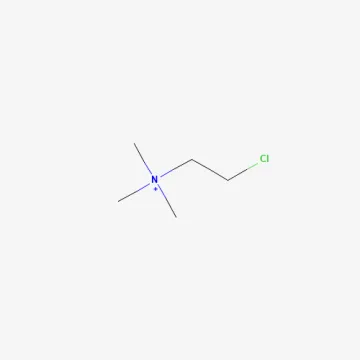
Chlormequat chloride
Description
Mode of action
Chlormequat chloride is a quaternary ammonium compound that functions as a plant growth regulator (PGR), specifically categorized as a retardant. It is extensively used in global agriculture to modify the growth habit of various crops, primarily cereals, to achieve better agronomic outcomes.
The primary mechanism of action involves the inhibition of gibberellin biosynthesis. Gibberellins are natural plant hormones responsible for stem elongation; by interfering with their production, chlormequat chloride reduces the length of the internodes without affecting the plant's overall metabolic processes.
Upon application, the substance is absorbed through leaves and roots and translocated via the xylem to the active growing points. This systemic action ensures that the chemical reaches the target tissues where cellular division and elongation are most active.
As a result of this physiological interference, the plant develops shorter and thicker stems. This structural change significantly increases the mechanical stability of the stem, effectively preventing lodging caused by wind, rain, or high nitrogen fertilization.
Furthermore, the treatment redirects energy from vegetative growth towards root development. By curbing excessive elongation, the plant invests more resources into its root system, which improves water and nutrient uptake, leading to greater resilience under abiotic stress conditions.
What it targets
Chlormequat chloride is primarily utilized on cereal crops, including wheat, triticale, and oats. It is an essential tool in intensive farming systems where high nitrogen applications are used to maximize yield but create a risk of stem weakness and crop lodging.
The main objective is to prevent lodging, which can cause significant financial losses. Lodged crops are difficult to harvest, prone to quality degradation, and susceptible to various fungal pathogens due to increased moisture and reduced airflow within the canopy.
The compound also helps in managing crop tillering. By suppressing apical dominance, it encourages the development of secondary, productive tillers, resulting in a more uniform canopy and an increased number of productive ears per unit area.
In ornamental horticulture, it is applied to produce compact, well-structured plants. This is particularly valuable for the production of seedlings and potted flowers, ensuring they remain robust and aesthetically pleasing during the nursery phase.
- Increased stem wall thickness and mechanical strength.
- Improved light penetration to the lower canopy layers.
- Enhanced synchronization of crop ripening.
- Reduced risk of yield loss from weather-related lodging.
Rates and timing
Application timing is critical and must be synchronized with the growth stages of the cereal crop. The optimal window is typically from the beginning of tillering to the early stem elongation phase, allowing the treatment to impact the lower internodes for maximum effect.
Application rates vary depending on soil fertility, the nitrogen application program, and the specific cultivar characteristics. Typical rates range from 0.5 to 2.0 liters of product per hectare, based on the specific concentration of the active ingredient.
When mixing with other pesticides, such as fungicides or herbicides, users must verify chemical compatibility. It is advisable to conduct a jar test to ensure no precipitation or antagonistic reactions occur before applying the mixture to the field.
Standard spraying equipment should be used, ensuring that the application provides uniform coverage of the leaf area. As the product is absorbed through the foliage, the quality of droplet distribution directly influences the final efficacy of the treatment.
Repeated applications should be planned with caution and must adhere to regulatory guidelines. Excessive or poorly timed applications can lead to the shortening of the ear or reduced grain size, which directly impacts yield potential, therefore strictly following the label instructions is mandatory.
Restrictions
The primary limitation is the physiological condition of the crop. Chlormequat chloride should never be applied to crops experiencing severe stress, such as drought, frost, or pest infestation, as it may exacerbate the damage and significantly stunt crop development.
Environmental conditions during application should be carefully monitored. Avoid applying the product during extreme heat or high wind speeds. Optimal conditions are moderate temperatures, which allow for efficient absorption without the risk of leaf scorch or product drift.
Over-application leads to clear symptoms of phytotoxicity, including leaf curling, yellowing of the margins, and extreme shortening of the stem, which can prevent the ear from emerging properly from the leaf sheath, ultimately reducing harvestable yield.
While considered moderately safe, users should exercise caution. Personal Protective Equipment (PPE) including gloves and respiratory protection is recommended to prevent skin and eye irritation, which can occur upon direct contact with the concentrated chemical.
Equipment must be thoroughly cleaned after use to prevent cross-contamination. Traces of the chemical can be harmful to sensitive crops, such as vegetables or fruit trees, so rinsing tanks and lines according to industry safety standards is a vital final step in the application process.
Regulatory
Status in the European Union
Approved in the EU
- CAS number
- 7003-89-6
- Approved from
- 01.12.2009
- Approval until
- 28.02.2027
- ADI
- 0.04 mg/kg bw/day
- ARfD
- 0.09 mg/kg bw
- AOEL
- 0.04 mg/kg bw/day
Hazard classification (CLP)
Acute Tox. 4 - H302Acute Tox. 4 - H312
EU legislation
EU status is for reference only and does not replace national registration in your country.
Content graph
Connections · Chlormequat chloride
Most often together:
Marketplace
Products · 8

Reggi
ЗАТ Фірма Август, Росія.,селище Вурнари,
Plant Growth Regulators
0
0
·
62
2 offers
5.32 €per 1 l
Buy

Chlormequat Chloride, RK
ДДЕ Фарм АГ, Тризен, Ліхтенштейн
Plant Growth Regulators
0
0
·
50
2 offers
4.78 €per 1 l
Buy

RETACEL EXTRA R 68
АТ Лучебниє заводи Драсловка, Чехія
Plant Growth Regulators
0
0
·
98
No offers
—
Details

Retacel Extra R 68
АТ Лучебниє заводи Драсловка, Чехія
Plant Growth Regulators
0
0
·
64
No offers
—
Details

RETAZEL 720
Lučebni závody Draslovka a.s. Kolin, AT
Plant Growth Regulators
0
0
·
54
No offers
—
Details

Synchrony SL
Няньджін Буст Індастріал енд Трейдінг Корп., Китай
Plant Growth Regulators
0
0
·
50
No offers
—
Details
