
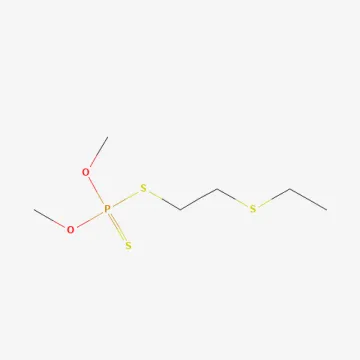
Thiometon
Description
Mode of action
Thiometon belongs to the class of organophosphorus compounds and acts as a systemic insecticide and acaricide. It is absorbed by plant tissues and translocated through the vascular system, providing long-lasting protection for the vegetative parts of the crop.
The mechanism of action is based on the inhibition of the enzyme acetylcholinesterase in the insect's nervous system. This causes a disruption of nerve impulse transmission, leading to paralysis and the rapid death of pests and mites.
Due to its high systemic properties, the substance penetrates the plant sap, rendering it toxic to piercing-sucking pests. The compound exhibits contact and stomach action, which enhances the effectiveness of treatments under varying levels of infestation.
Thiometon shows stability under certain conditions; however, its activity may decrease under high temperatures and intense solar radiation. In the soil, the substance gradually undergoes biological and chemical degradation.
This compound has often been used in multi-component mixtures to broaden the spectrum of action, as its biological efficacy allows for the control of hidden-living pests that are difficult to reach with contact-only products.
What it targets
The product is primarily targeted at controlling sucking insects, such as aphids, thrips, and various species of psyllids. It is effective against many types of mites that infest agricultural crops.
The main spectrum of application includes cereal crops, open and protected ground vegetables, as well as industrial and fruit plantations. It is indispensable during mass aphid outbreaks, which are vectors for plant viral diseases.
Rates and timing
Application rates for thiometon vary depending on the specific formulation of the pesticide and the type of crop being treated. On average, for field crops, the concentration of the working solution is determined based on the phytosanitary condition of the fields.
The timing of treatments should coincide with the period of active pest colonization or upon reaching the economic threshold of damage. It is important to maintain intervals between sprayings to prevent the development of pest resistance.
Restrictions
Handling thiometon requires strict adherence to personal protective measures, as the substance is toxic to humans and warm-blooded animals. Contamination of water bodies must be avoided due to its high toxicity to aquatic organisms.
It is essential to strictly observe the pre-harvest intervals specified in the application regulations for the specific pesticide. Restrictions also apply to working near apiaries due to the high insecticidal activity against bees and other pollinators.
Status in the European Union
Not approved in the EU
- CAS number
- 640-15-3
- Category (EU)
- AC - Acaricide
- ADI
- 0.003 mg/kg bw/day
EU status is for reference only and does not replace national registration in your country.