
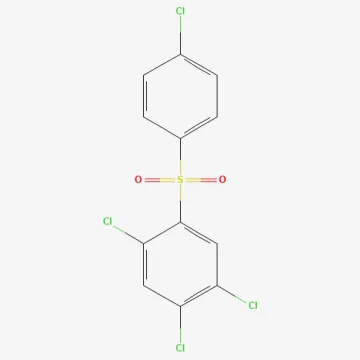
Tetradifon
Description
Mode of action
Tetradifon belongs to a specific group of acaricides that are highly effective against mites. Chemically, it is an organochlorine compound, specifically a diphenyl sulfone derivative.
The mode of action focuses on suppressing the development of mite eggs, larvae, and nymphs. As a classic ovicide and larvicide, it disrupts the pest's metabolism during early ontogenesis, preventing development into mature stages.
The substance exhibits strong contact action, which necessitates thorough and uniform coverage of leaf surfaces during spraying to ensure maximum efficacy.
A notable feature is its lower initial toxicity against adult mites (imagos). However, its sterilizing effect prevents the hatching of viable eggs, effectively breaking the pest population's reproductive cycle.
Due to its selective nature, the active ingredient causes minimal harm to beneficial insects and entomophagous predators, facilitating its use in integrated pest management programs.
What it targets
Tetradifon is primarily used to control phytophagous mite populations, including spider mites, gall mites, and rust mites, on a wide range of horticultural and vegetable crops.
Target species include common spider mites, fruit tree red spider mites, and other phytophagous pests that damage orchards, berries, and greenhouse vegetables.
Application is most justified during periods of mass infestation, specifically when targeting egg clutches and young larval stages during the active growing season.
Tetradifon is often used in tank mixtures or rotated with systemic acaricides that exhibit high activity against adult mites to ensure comprehensive control across all developmental stages.
The substance is effective on various fruit-bearing trees such as apples, pears, and citrus, as well as in vineyards and protected ground vegetable production.
Rates and timing
The dosage rates for Tetradifon depend on the specific formulation and the crop type, generally ranging from 0.5 to 2.0 kg of the active ingredient per hectare.
Application timing is determined by phytosanitary monitoring, focusing on the peak period of larval emergence from overwintered eggs or the onset of active reproduction cycles.
For optimal preparation of the spraying solution, clean water must be used, with continuous agitation required to maintain a stable and uniform concentration throughout the application process.
The frequency of seasonal applications is strictly regulated to prevent the development of mite resistance, as frequent use of the same chemical class accelerates the selection of resistant strains.
It is essential to consider economic injury levels and current pest pressure; prophylactic use is less recommended than targeted application upon initial identification of pest hot spots.
Restrictions
When handling Tetradifon, strict adherence to personal protective equipment protocols is required, including the use of protective clothing, gloves, respirators, and goggles.
While the substance has relatively low mammalian toxicity, it is crucial to observe established pre-harvest intervals to ensure residues do not exceed regulatory limits in the final product.
Applications near bodies of water or apiaries during active bee foraging hours are prohibited, despite the substance's specificity toward mite physiology.
The product must be stored in a cool, dry place, out of the reach of children and animals, inside its original, tightly sealed container away from food supplies.
To mitigate the risk of resistance, rotation with acaricides from different chemical classes, such as avermectins or spiro-compounds, is strongly advised.
Status in the European Union
Not approved in the EU
- CAS number
- 116-29-0
- Category (EU)
- AC - Acaricide
EU status is for reference only and does not replace national registration in your country.