

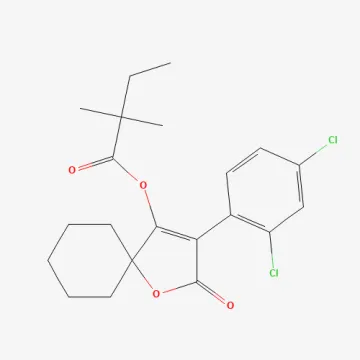
Description
Mode of action
Spirodiclofen is a member of the tetronic acid chemical class (ketoenols). This active ingredient serves as a potent acaricide and insecticide, providing broad-spectrum control against various agricultural pests through contact action.
The primary mechanism of action involves the inhibition of lipid biosynthesis within the target pest. By disrupting the fatty acid metabolism, the compound effectively arrests development and prevents the normal physiological functions of mites and insects.
This substance is highly effective against all mobile stages of mite development, including larvae, protonymphs, and deutonymphs. Furthermore, it exerts a sterilization effect on adult females, significantly reducing the viability of eggs and the overall population growth rate.
Spirodiclofen is characterized by high lipophilicity, which ensures strong adherence to the leaf surface and resistance to being washed off by rainfall. Although it does not possess systemic properties, its ability to remain active on the foliage provides a sustained protective residual effect.
Due to its unique mode of action, spirodiclofen is an essential tool in resistance management programs. It successfully controls populations that have developed resistance to traditional classes of acaricides, such as organophosphates or synthetic pyrethroids.
What it targets
The substance is primarily used to control phytophagous mites, including spider mites, rust mites, and gall mites. It is widely employed in the protection of orchards, vineyards, and various vegetable crops against significant yield-reducing infestations.
In addition to its acaricidal activity, spirodiclofen provides control over certain insect species, such as whiteflies. This supplemental action makes it a versatile component of integrated pest management (IPM) strategies.
Rates and timing
Application rates vary depending on the target crop, pest density, and regional guidelines. It is typically applied during the growing season as soon as pest populations exceed economic injury levels, ensuring thorough coverage of all plant surfaces.
To maximize efficacy, spray volume must be sufficient to reach the underside of leaves where mites typically reside. Rotational use with other acaricides having different modes of action is highly recommended to preserve the long-term effectiveness of the active ingredient.
Restrictions
Spirodiclofen is classified as toxic to aquatic organisms. Strict buffer zones must be maintained near water bodies to prevent runoff, and disposal of product residues must comply with local environmental regulations to avoid contamination.
Operators must wear appropriate personal protective equipment during handling and application to prevent dermal or respiratory exposure. Users should also strictly adhere to pre-harvest intervals (PHI) to ensure the safety of the harvested agricultural produce.
Regulatory
Status in the European Union
Not approved in the EU
- CAS number
- 148477-71-8
- Category (EU)
- AC - Acaricide
- Approved from
- 01.08.2010
- Approval until
- 31.07.2020
- ADI
- 0.015 mg/kg bw/day
- ARfD
- Not appl.
- AOEL
- 0.009 mg/kg bw/day
Hazard classification (CLP)
Aquatic Chronic 1 - H410Carc. 1B - H350Repr. 2 - H361fSTOT RE 2 - H373Skin Sens. 1B - H317
EU legislation
EU status is for reference only and does not replace national registration in your country.
Content graph
Connections · Spirodiclofen
Most often together:
Marketplace
Products · 12


