

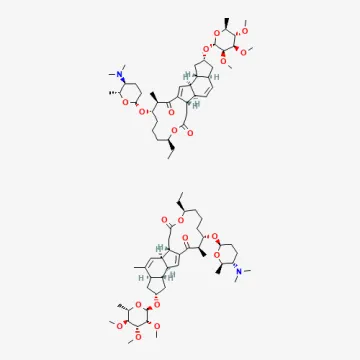
Description
Mode of action
Spinosad belongs to the chemical class of spinosyns, which are unique natural metabolites produced by the soil bacterium Saccharopolyspora spinosa through fermentation. It acts as a biological insecticide that successfully combines the high efficacy of synthetic chemicals with an environmentally friendly profile.
The mechanism of action involves targeting the insect's nervous system. Spinosad induces hyper-excitation of cholinergic neurons by binding to nicotinic acetylcholine receptors, a mode of action distinct from organophosphates or pyrethroids.
This biological trigger causes involuntary muscle contractions, tremors, and paralysis in the pest. Death occurs shortly after ingestion or contact due to the depletion of the insect's vital energy reserves.
The substance possesses both contact and stomach activity. To achieve the best results, the pest must either consume the plant tissue treated with the insecticide or come into direct contact with the residue on the leaf surface.
A key attribute is its translaminar activity, meaning the compound can penetrate into plant tissues. This property is crucial for controlling hidden pests that feed inside the leaf structure, such as miners.
What it targets
Spinosad is a powerful tool against a wide range of pests in both open fields and greenhouses. It is particularly effective in controlling Lepidoptera (caterpillars), thrips, and various leaf-mining insects.
The primary pests susceptible to this active substance include:
- Thrips (e.g., Western flower thrips);
- Caterpillars of various moths and butterflies;
- Leaf-mining flies;
- Certain species of mites and beetles.
It is widely used on vegetable crops such as tomatoes, cucumbers, peppers, and eggplants. Due to its safety profile regarding beneficial insects when applied according to regulations, it is a staple in Integrated Pest Management (IPM) programs.
In ornamental and floral horticulture, Spinosad is considered a primary control agent for thrips, which are notoriously difficult to manage with conventional insecticides due to rapid resistance development.
Its high efficacy against populations that have developed resistance to traditional synthetic insecticides makes Spinosad an essential component in anti-resistance crop protection strategies.
Rates and timing
The pre-harvest interval for Spinosad is typically short, allowing for flexible application timing on crops with short growth cycles. Specific dosage rates depend on the intensity of the infestation and the targeted pest species.
Generally, low concentrations of the active ingredient are sufficient for preparing the working solution. However, effective control of thrips requires repeated applications, usually with an interval of 5 to 10 days during periods of high pest pressure.
Applications are recommended during early morning or evening hours. Although Spinosad has moderate resistance to wash-off, avoiding direct sunlight during the initial application helps ensure better coverage and efficacy on leaf surfaces.
When preparing tank mixes, chemical compatibility must be verified. Mixing Spinosad with highly alkaline products should be avoided, as high pH levels can degrade the compound and reduce its biological activity.
Thorough coverage of the plant surface is essential. Growers should use equipment that provides fine, uniform misting to ensure the product reaches the target areas of the plant canopy.
Restrictions
Despite its natural origin, Spinosad is highly toxic to bees upon direct contact. Applications should be scheduled to avoid any exposure to flowering plants while pollinators are actively foraging in the area.
There is a potential for pest resistance development if the same active ingredient is used too frequently. It is highly recommended to rotate Spinosad with other insecticides belonging to different chemical classes.
Strict personal hygiene and safety protocols must be followed when handling the product in greenhouses. Appropriate personal protective equipment (PPE), including gloves, respirators, and goggles, must be used during mixing and spraying.
Spinosad is sensitive to prolonged ultraviolet exposure, which can degrade the active ingredient on exposed leaf surfaces. Early morning or evening applications are best to maximize residual effectiveness in the field.
The product must be stored in its original packaging in a cool, dry place, inaccessible to children, pets, and unauthorized personnel, and kept strictly separate from food and feed supplies.
Regulatory
Status in the European Union
Approved in the EU
- CAS number
- 168316-95-8
- Category (EU)
- IN - Insecticide
- Approved from
- 01.04.2026
- Approval until
- 01.04.2041
- ADI
- 0.024 mg/kg bw/day
- ARfD
- 0.1 mg/kg bw
- AOEL
- 0.02 mg/kg bw/day
Hazard classification (CLP)
Aquatic Acute 1 - H400Aquatic Chronic 1 - H410
EU legislation
EU status is for reference only and does not replace national registration in your country.
Content graph
Connections · Spinosad
Most often together:
Marketplace
Products · 2

SPINTOR 240 SC
Доу АгроСайенсіс, Кінг’з-Лінн, Великобританія
Insecticides
0
0
·
82
2 offers
187.44 €per 1 l
Buy