
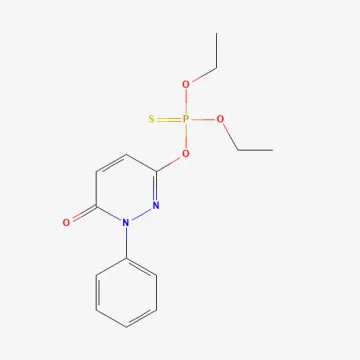
Pyridaphenthion
Description
Mode of action
Pyridaphenthion belongs to the chemical class of organophosphate compounds. It acts as a potent contact and stomach insecticide, also exhibiting significant acaricidal properties.
The mechanism of action involves the inhibition of the enzyme acetylcholinesterase in the nervous system of insects and mites. This leads to the disruption of nerve impulses, resulting in paralysis and death of the pest.
The substance quickly penetrates the insect cuticle, providing an immediate knockdown effect upon contact. This rapid action is crucial for preventing severe crop damage during pest outbreaks.
It does not possess systemic activity within the plant; therefore, it remains on the surface. Thorough coverage of the foliage is essential to ensure maximum efficacy against target pests.
The compound degrades relatively quickly in the environment, which is beneficial for integrated pest management programs, provided that label instructions are strictly followed.
What it targets
This active ingredient is effective against a broad spectrum of chewing and sucking pests that affect various agricultural crops throughout the growing season.
It is widely used to control aphids, scale insects, and mealybugs, as well as thrips, which frequently cause significant economic losses in horticulture and vegetable production.
Pyridaphenthion is highly effective against spider mites, making it an essential tool for protecting orchards and vegetable fields from mixed infestations of pests.
It is also utilized to manage lepidopteran pests, such as codling moths and leafrollers, which damage fruit and foliage, significantly impacting harvest quality and yield.
- Aphids and spider mites
- Scale insects and mealybugs
- Codling moths and leafrollers
- Thrips and leafminers
Rates and timing
Application rates depend on the crop type, pest species, and the level of infestation. Always refer to the product label for specific dosage instructions tailored to your agricultural situation.
Timing is critical; applications should be synchronized with the peak activity periods or the specific developmental stages of the target pests to achieve optimal control results.
To mitigate the risk of pest resistance development, it is recommended to rotate pyridaphenthion with other insecticide classes that possess different modes of action.
Prepare the spray solution just before application and ensure thorough agitation to maintain a uniform mixture. Proper equipment calibration is necessary for achieving even coverage.
Strictly follow the maximum number of applications allowed per season to prevent excessive chemical residue and comply with safety and environmental regulations.
Restrictions
As an organophosphate, the substance is toxic; therefore, operators must wear proper personal protective equipment (PPE), including respiratory protection, gloves, and protective clothing.
Applications must not be performed when bees or other pollinators are actively foraging. Notify local beekeepers and strictly avoid spraying during the flowering period.
Avoid applications under adverse weather conditions, such as high winds, which may cause drift, or extreme temperatures that could reduce the effectiveness of the treatment.
Adhere strictly to the pre-harvest interval (PHI) specified on the label to ensure that the produce is safe for consumption and complies with food safety standards.
Storage should be in a cool, dry, and well-ventilated area, in the original container, keeping it out of reach of children, unauthorized persons, and livestock.
Status in the European Union
Not approved in the EU
- CAS number
- 119-12-0
- Category (EU)
- AC - Acaricide
EU status is for reference only and does not replace national registration in your country.