
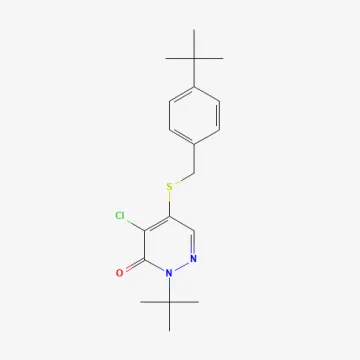
Pyridaben
Description
Mode of action
Pyridaben is a synthetic acaricide and insecticide belonging to the pyridazinone chemical class. It acts primarily by inhibiting the mitochondrial electron transport at Complex I, effectively starving the pest of cellular energy.
The compound provides rapid knockdown activity upon contact or ingestion, leading to paralysis and death within 48 hours for most target species of mites and insects.
It possesses excellent translaminar properties, which allow the active ingredient to penetrate leaf tissue and provide protection even on the underside of leaves where pests often hide.
Pyridaben is known for its photostability and resistance to wash-off, ensuring that the residual control remains effective even under varying field conditions.
This substance is highly effective against all developmental stages of mites, including larvae, nymphs, and adults, which simplifies the management of complex pest populations.
What it targets
Pyridaben is primarily utilized to combat phytophagous mites from the Tetranychidae, Eriophyidae, and Tarsonemidae families, which are major threats to high-value horticultural crops.
It demonstrates strong efficacy against spider mites, European red mites, and various gall mites that cause significant damage to foliage and fruit quality.
Beyond its primary acaricidal function, Pyridaben provides secondary control of several insect species, including whiteflies, aphids, thrips, and leafhoppers.
The product is frequently chosen for integrated pest management (IPM) programs due to its ability to control pests that have developed resistance to organophosphates or carbamates.
- Pome and stone fruits
- Grapes and vineyards
- Vegetable crops in greenhouses
- Ornamental flowering plants
Rates and timing
Application rates for Pyridaben typically range from 0.5 to 1.5 kg of product per hectare, depending on the pest pressure and the specific crop requirements.
For optimal results, applications should be timed to coincide with the early stages of mite infestation before populations reach levels that cause irreversible damage.
Thorough coverage of the foliage is essential to ensure that the chemical makes direct contact with the pests and provides adequate residual protection.
Farmers are advised to limit the number of applications to one or two per season to maintain product effectiveness and slow the development of resistance.
In greenhouse settings, rotation with other acaricides having different modes of action is mandatory to ensure long-term sustainability of the pest control program.
Restrictions
Pyridaben is highly toxic to aquatic life, including fish and aquatic invertebrates, requiring strict buffer zones near water bodies during spray operations.
Safety equipment, including chemical-resistant gloves, respirators, and protective eyewear, must be worn at all times when handling or applying this pesticide.
Mixing Pyridaben with strong alkaline substances is discouraged as it can lead to the rapid degradation of the active ingredient and loss of biological performance.
To protect beneficial insects and pollinators, spraying should be avoided during the blooming period when bees and other beneficial organisms are most active.
The pre-harvest interval (PHI) specified on the product label must be strictly observed to ensure that chemical residues in harvested crops meet food safety standards.
Status in the European Union
Approved in the EU
- CAS number
- 96489-71-3
- Category (EU)
- AC - Acaricide
- Approved from
- 01.05.2011
- Approval until
- 31.01.2030
- ADI
- 0.01 mg/kg bw/day
- ARfD
- 0.05 mg/kg bw
- AOEL
- 0.005 mg/kg bw/day
EU status is for reference only and does not replace national registration in your country.