

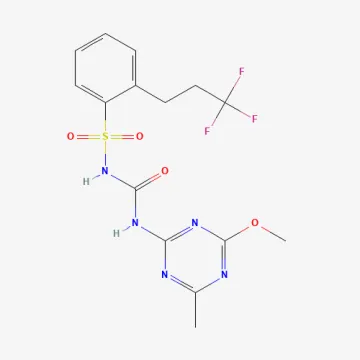
Description
Mode of action
Prosulfuron belongs to the sulfonylurea chemical class. It is a systemic herbicide capable of rapidly entering plants through leaves and root systems.
The mechanism of action is based on inhibiting the enzyme acetolactate synthase (ALS), which stops the biosynthesis of essential amino acids such as valine, leucine, and isoleucine.
Blocking protein synthesis causes cell division in the meristematic tissues of weeds to cease. The growth of susceptible species stops just hours after application.
Complete weed death occurs within 2–3 weeks after treatment. Visual symptoms include chlorosis, discoloration, and gradual necrotic death of growing points.
The substance is characterized by high selectivity, allowing it to be effectively used in agricultural crop fields without the risk of suppressing crop development.
What it targets
This herbicide is designed for the control of a wide range of broadleaf weeds, including the most stubborn species in corn and small grain fields.
It is effective against weeds such as Amaranthus, Chenopodium album, Polygonum species, Solanum nigrum, as well as various types of Ambrosia and Cirsium.
Prosulfuron effectively suppresses weeds that have developed resistance to other herbicide chemical groups, making it a key tool in anti-resistance strategies.
The product is active against weeds in their active growth phase, particularly from the 2 to 4 true leaf stage for most broadleaf species.
Effects on perennial weeds are limited to the suppression of above-ground parts, but a systemic approach significantly weakens the plants' root systems.
Rates and timing
Prosulfuron application rates depend on the weed species composition, the degree of field infestation, and the growth stage of the crop at the time of application.
Usually, the product is applied by spraying crops during the early stages of weed development, when they are most susceptible to the active ingredient.
When used in tank mixtures with other herbicides, application rates may be adjusted to enhance the synergistic effect.
To achieve optimal results, it is essential to ensure uniform coverage of the weed surface with the working solution using properly maintained spray equipment.
The temperature range during application should be between +10 and +25 degrees Celsius to ensure intense metabolic processes within the weed tissues.
Restrictions
There are strict crop rotation restrictions after using Prosulfuron, as the substance may retain activity in the soil for a specific period.
Application is not recommended during risks of night frosts or immediately after precipitation, as this can reduce the herbicide's effectiveness.
When working with the product, it is mandatory to strictly follow personal protective equipment regulations to prevent contact with skin and mucous membranes.
Avoid spray drift onto neighboring sensitive crops by using specialized nozzles and monitoring wind speed during spraying operations.
After finishing work, the sprayer must be thoroughly washed with specialized cleaners to remove residues of the active ingredient from the tank and hose system.
Content graph
Connections · Prosulfuron
Most often together:
Marketplace