

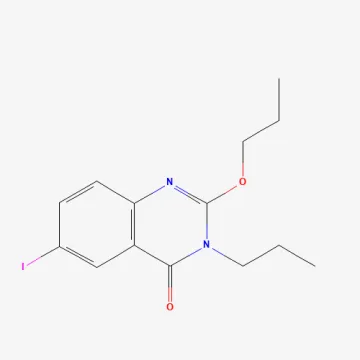
Description
Mode of action
Proquinazid is a potent active ingredient belonging to the quinazolinone chemical class. It is widely recognized for its high efficacy in controlling specific fungal diseases in agricultural crops.
The primary mode of action involves stimulating the natural plant defense mechanisms. By triggering systemic acquired resistance, the plant becomes more capable of preventing fungal colonization.
Proquinazid acts as a preventive fungicide, inhibiting the germination of spores and the development of mycelia. It is particularly effective when applied before the onset of visual infection symptoms.
A unique property of proquinazid is its ability to create a vapor phase. This allows the active substance to redistribute across untreated foliage and adjacent leaves, providing a uniform protective effect even in dense canopy areas.
This vapor-phase activity significantly enhances the overall protection of the plant, ensuring that micro-environments where the fungus might thrive are also covered by the active ingredient.
What it targets
Proquinazid is primarily used to combat powdery mildew, a fungal disease belonging to the order Erysiphales. It is an essential tool for maintaining the health and yield of various crops.
In cereal crops such as wheat and barley, it is effectively used to control Erysiphe graminis. Preventing this disease helps maintain leaf integrity, which is vital for proper grain filling.
The fungicide is also extensively utilized in vineyards to control powdery mildew, specifically Uncinula necator (Oidium). It helps preserve the quality of the grape crop and protects it from damage.
Furthermore, proquinazid can be used in integrated pest management programs. Its selectivity makes it a safer choice compared to broad-spectrum fungicides, provided it is used according to current regulations.
By protecting foliage, the product helps crops maximize photosynthesis, which is crucial for achieving high yields and premium quality of the harvested produce.
Rates and timing
The application rate of proquinazid is determined by the crop type, disease pressure, and environmental conditions. It is typically applied at the early signs of disease development to ensure maximum control.
Proper calibration of spraying equipment is essential to achieve the desired coverage. Since the product relies partially on vapor-phase activity, a uniform distribution is key to its efficacy.
Strategic timing is crucial for proquinazid application. It should be applied during periods conducive to fungal growth, typically characterized by moderate temperatures and high humidity.
To maximize efficiency, proquinazid is often used in tank mixtures with other fungicide classes. This strategy helps manage resistance and improves the overall spectrum of activity against concurrent diseases.
Regular scouting of fields is necessary to determine the optimal timing for application. Avoiding over-application while maintaining protective levels is a core principle of modern integrated pest management.
Restrictions
Safety is a priority when handling proquinazid. Operators must use appropriate personal protective equipment (PPE) to minimize exposure during mixing and application processes.
Environmental protection is critical. Proquinazid should not be applied near water bodies or sensitive habitats to prevent contamination of aquatic ecosystems, as it may be harmful to aquatic organisms.
To maintain long-term efficacy, it is vital to practice fungicide rotation. Relying solely on one class of chemicals increases the risk of resistance development among target pathogens.
Beekeepers and other beneficial insect populations must be considered. Although proquinazid has a favorable profile, local regulations regarding application during bloom or peak activity times must be followed.
Storage should be in a secure, well-ventilated location, keeping the product away from food, feed, and children. Always refer to the specific label instructions provided by the manufacturer for local compliance.
Regulatory
Status in the European Union
Approved in the EU
- CAS number
- 189278-12-4
- Approved from
- 01.08.2010
- Approval until
- 31.12.2027
- ADI
- 0.01 mg/kg bw/day
- ARfD
- 0.2 mg/kg bw
- AOEL
- 0.02 mg/kg bw/day
Hazard classification (CLP)
Aquatic Acute 1 - H400Aquatic Chronic 1 - H410Carc. 2 - H351
EU legislation
EU status is for reference only and does not replace national registration in your country.
Content graph
Connections · Proquinazid
Most often together:
Marketplace
Products · 14


Talenzo 20 g/l
«Дюпон Інтернешнл Оперейшнз Сарл», Швейцарія
Fungicides
0
0
·
38
4 offers
94.53 €per 1 l
Buy


Talios 20 c.e., (Proquinazid, 200 g/l)
«Дюпон Інтернешнл Оперейшнз Сарл», Швейцарія
Fungicides
0
0
·
42
No offers
—
Details

Talium 20 g/l (Proquinazid, 20 g/l)
«Дюпон Інтернешнл Оперейшнз Сарл», Швейцарія
Fungicides
0
0
·
40
No offers
—
Details