
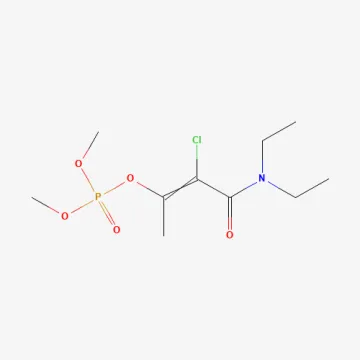
Phosphamidon
Description
Mode of action
Phosphamidon belongs to the group of organophosphorus compounds and is a systemic insecticide and acaricide. The substance has the ability to rapidly penetrate plant tissues and move through the vascular system, providing protection to untreated parts of the crop.
The main mechanism of action is the inhibition of the enzyme acetylcholinesterase in insects. This leads to disruption of normal nerve impulse transmission, causing paralysis and rapid death of the pest.
Due to its high systemic properties, the substance effectively acts on pests that lead a hidden lifestyle or feed inside leaf blades. It also shows pronounced contact and stomach action when directly deposited on the insect's surface.
In plants, phosphamidon undergoes gradual metabolic degradation. This process ensures a sufficient period of residual control, which varies depending on the type of crop and weather conditions.
The efficacy of the product is maintained under various temperature regimes, although optimal indicators are observed in moderately warm weather. At lower temperatures, the speed of systemic movement of the substance within tissues may slow down.
What it targets
Phosphamidon is used to control a wide range of sucking and chewing pests. It shows high effectiveness against aphids, various species of mites, and leaf-mining flies.
The product is effective against coleopteran and lepidopteran insects at early stages of their development. It is often used to protect orchards from leaf-mining moths and leafrollers.
In vegetable growing, it is used to control populations of whiteflies and thrips. The ability of the substance to penetrate deep into the leaf allows for the destruction of pests protected by the dense epidermis of the plant.
The agent is also used in protecting grain crops from stem-boring pests. It actively suppresses the development of populations of bugs and leafhoppers, which cause significant damage to crops.
In some cases, it is used against polyphagous pests in greenhouses where rapid suppression of insect population outbreaks is necessary.
Rates and timing
Application rates of phosphamidon are determined by the formulation and the regulations for using a specific product. Typically, working solutions with a concentration of 0.05% to 0.1% of the active ingredient are used.
The timing of treatments is tied to the economic threshold of the specific pest species. It is important to spray during the period of mass emergence of larvae or the onset of active feeding of adults for maximum effectiveness.
The frequency of treatments per season is strictly limited to prevent the accumulation of residues in the products. Intervals between spraying should be at least 10–14 days.
When scheduling work, the phenological stage of the crop should be considered. Treatments are stopped well before harvest to ensure consumer safety.
It is recommended to monitor the condition of the crops before and after application. In case of high population density, re-application is possible, but only in compliance with anti-resistance program regulations.
Restrictions
Phosphamidon has high toxicity to warm-blooded animals and humans, therefore it requires strict adherence to safety regulations. Personal protective equipment for skin and respiratory organs is mandatory when working with the product.
The product poses a high risk to bees and other beneficial entomophages. It is forbidden to carry out treatments during the flowering of honey plants and near apiaries.
There are strict restrictions regarding pre-harvest intervals before people can enter the field for manual or mechanical work after spraying.
Discharge of residual working solution into water bodies and sewage systems is not allowed. Sanitary zones near sources of drinking water must be observed.
Due to the high probability of resistance development in pests, it is not recommended to perform more than two consecutive treatments with the same product. Alternating with insecticides from other chemical groups is advised.
Status in the European Union
Not approved in the EU
- CAS number
- 13171-21-6
- Category (EU)
- AC - Acaricide
- ADI
- 0.0005 mg/kg bw/day
EU status is for reference only and does not replace national registration in your country.