

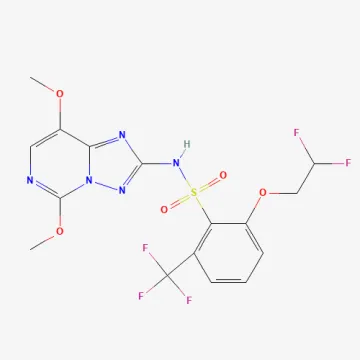
Description
Mode of action
Penoxsulam belongs to the triazolopyrimidine sulfonamide chemical class. It is a highly effective systemic active ingredient that is absorbed by weeds through leaves and roots.
The mechanism of action is based on the inhibition of the acetolactate synthase (ALS) enzyme. Inhibiting this enzyme leads to an immediate halt in cell division and growth of the target weeds.
Following absorption, the substance is rapidly translocated through the phloem and xylem to the growing points of the plant. This allows for effective impact even on hard-to-reach meristematic tissues.
Complete mortality of sensitive weeds occurs within 2–4 weeks after treatment. Early symptoms of chlorosis and necrosis of growing points are visible within a few days.
The product exhibits high selectivity, which allows cultural plants, particularly rice, to rapidly metabolize the substance into inactive compounds.
What it targets
Penoxsulam is primarily used in rice crops to control a wide range of broadleaf and grass weeds. It demonstrates high efficiency against difficult-to-control species.
The target list includes dangerous weeds such as barnyard grass (Echinochloa), as well as various species of sedges and bulrushes. The product also suppresses a wide spectrum of aquatic broadleaf plants.
The substance is particularly important for controlling resistant weed populations that have developed tolerance to other classes of herbicides.
The efficiency of the product is maintained under various weather conditions, which is crucial for keeping fields clean in unstable climatic environments.
The use of penoxsulam significantly reduces the competitive pressure on the crop during critical stages of harvest formation.
Rates and timing
Application rates for penoxsulam depend on the weed species composition and their growth stage. Generally, treatments are performed during early growth stages when weeds are most vulnerable.
In rice paddies, the product is applied either as a post-emergence treatment or within pre- and post-emergence control systems, depending on the regulations of the specific formulation.
When planning application, it is important to ensure uniform distribution of the spray solution, as systemic action requires high-quality coverage of the leaf surface.
Optimal timing typically falls within the 2–4 leaf stage of grassy weeds. Delaying treatment can lead to reduced biological efficacy.
It is recommended to follow temperature guidelines: efficacy is higher during active weed growth, typically in the range of +15 to +25 degrees Celsius.
Restrictions
Penoxsulam can be sensitive regarding crop rotation. Residual amounts in the soil require careful planning for crops following rice in the current or subsequent season.
It is not recommended to apply the product on fields intended for sensitive crops immediately after harvest without prior assessment of residual soil activity.
When working with the herbicide, personal protective equipment for respiratory, skin, and eye protection must be used. Prevent runoff into fish-bearing water bodies.
Always adhere to mandatory safety buffer zones and pre-harvest intervals for field reentry, whether for mechanical or manual work.
Storage should be in original packaging in a cool, dry place, keeping it out of reach of unauthorized personnel and animals.
Regulatory
Status in the European Union
Approved in the EU
- CAS number
- 219714-96-2
- Category (EU)
- HB - Herbicide
- Approved from
- 01.08.2010
- Approval until
- 15.05.2027
- ADI
- 0.05 mg/kg bw/day
- ARfD
- Not appl.
- AOEL
- 0.18 mg/kg bw/day
EU legislation
EU status is for reference only and does not replace national registration in your country.
Content graph
Connections · Penoxsulam
Most often together:
Marketplace


