
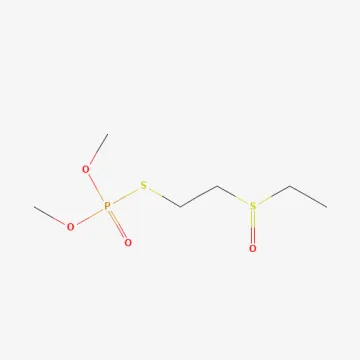
Oxydemeton-methyl
Description
Mode of action
Oxydemeton-methyl belongs to the organophosphate chemical class. It acts as a systemic insecticide and acaricide, primarily affecting the nervous system of pests through the inhibition of the enzyme acetylcholinesterase.
When applied to plants, the substance is rapidly absorbed by leaves and stems. Once inside the plant tissue, it is translocated through the vascular system, providing protection to both existing and new growth.
This systemic property allows the compound to reach hidden pests that are difficult to target with contact-only insecticides. It remains effective against insects that feed on the sap or tissues of the treated plant.
Due to its high level of absorption into the cuticle and internal tissues of the plant, the chemical shows resistance to being washed off by rainfall shortly after application, which increases its reliability in field conditions.
The protective effect duration usually lasts between two to three weeks, depending on environmental factors such as temperature, humidity, and the speed of the crop's development during the growing season.
What it targets
Oxydemeton-methyl is primarily used to control sucking insects. It is highly effective against various aphid species, which cause significant damage by feeding on plant sap and spreading viral infections between plants.
The compound also demonstrates excellent efficacy against herbivorous mites, including the red spider mite, which is a major pest for many horticultural and agricultural crops, especially during hot and dry weather.
Additional target pests include scales, mealybugs, and whiteflies. Its broad spectrum of activity makes it a versatile tool for protecting vegetable crops, fruit orchards, cereals, and ornamental plants from infestation.
By controlling these pests, the insecticide helps preserve the vigor of the plant, preventing leaf curling, stunted growth, and loss of productivity that typically follows severe pest pressure in the early stages of development.
The chemical's ability to manage hidden pest populations makes it an essential component in integrated pest management programs where systemic control is required to prevent yield loss in high-value crops.
Rates and timing
Application rates for Oxydemeton-methyl depend on the specific crop and the severity of the pest infestation. Generally, the recommended range is between 0.5 to 1.5 liters of the formulation per hectare.
Strict adherence to pre-harvest intervals (PHI) is required. Depending on the crop, the safety period before harvesting can range from 20 to 30 days due to the systemic nature of the compound within the plant tissues.
For best results, applications should be carried out during cooler parts of the day, such as early morning or late evening. Calm weather conditions are necessary to ensure even distribution and avoid spray drift.
To prevent the development of pest resistance, it is recommended to rotate Oxydemeton-methyl with insecticides from different chemical groups. Continuous use on the same site should be avoided in favor of seasonal rotation strategies.
When preparing the spray solution, ensure that equipment is clean and free of residues from previous chemicals, as organophosphates can be sensitive to the pH levels of the water and the presence of other tank-mix components.
Restrictions
Oxydemeton-methyl is highly toxic to bees and other beneficial insects. Application during the flowering period is strictly prohibited to prevent massive losses of pollinators and potential disruption of the local ecosystem.
The compound poses significant health risks to humans and mammals. Workers must wear appropriate personal protective equipment (PPE), including respiratory protection, gloves, and protective clothing, during the mixing and spraying process.
Do not apply the insecticide near water bodies, drainage channels, or sources of drinking water, as it can cause long-term environmental damage and negatively affect aquatic life if it enters the water supply.
Great care must be taken to prevent spray drift toward neighboring areas, particularly if those areas contain forage crops, gardens with harvest-ready produce, or livestock grazing zones.
After the application, all equipment must be thoroughly cleaned. Empty containers must be disposed of according to strict local environmental regulations to avoid contamination of soil and groundwater resources.
Status in the European Union
Not approved in the EU
- CAS number
- 301-12-2
- Category (EU)
- AC - Acaricide
- ADI
- 0.0003 mg/kg bw/day
- ARfD
- 0.0015 mg/kg bw
- AOEL
- 0.001 mg/kg bw/day
EU status is for reference only and does not replace national registration in your country.