
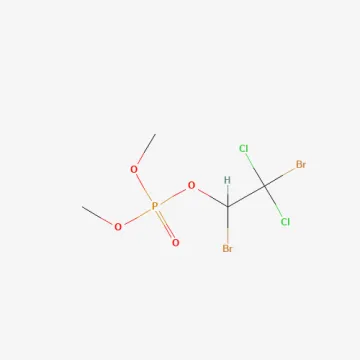
Naled
Description
Mode of action
Naled belongs to the organophosphate (OP) class of chemicals. It functions as a contact and stomach insecticide and acaricide that irreversibly inhibits the enzyme acetylcholinesterase within the insect's nervous system.
The inhibition of this enzyme causes an accumulation of acetylcholine at nerve synapses, leading to continuous nerve impulse transmission, paralysis, and the rapid death of the pest following direct contact or ingestion.
Due to its significant volatility, Naled also exhibits fumigant properties, allowing for the effective control of insects even in confined spaces or areas where direct contact with spray droplets is limited.
The substance provides a rapid "knockdown" effect, which is critical for immediately halting outbreaks of pests and preventing significant crop damage during critical stages of plant development.
Unlike many other organophosphates, Naled degrades relatively quickly in the environment, making it a useful tool for site-specific population control with shorter pre-harvest intervals.
What it targets
Naled is used to control a wide range of chewing and sucking insects on various agricultural crops, including members of the Lepidoptera, Coleoptera, and Hemiptera orders.
It is effective against aphids, thrips, leafhoppers, and various species of caterpillars that damage the foliage of vegetable, fruit, and industrial crops.
The substance shows high acaricidal activity, making it a valuable tool for managing populations of spider mites and other plant-feeding mites in orchards and greenhouses.
Naled is also widely utilized in storage facilities to manage stored-product pests and in livestock complexes for the control of flying insects like flies and mosquitoes.
Primary target pests include:
- Various leafrollers and cutworms
- Colorado potato beetle at early larval stages
- Spider mites and phytophagous mites
- Stored-grain pest complexes
Rates and timing
Application rates for Naled depend on the specific crop, target pest, and application method, whether it involves fine-droplet foliar spraying or fumigation of closed environments.
When applying in fields, it is crucial to consider temperature conditions: efficiency decreases at high temperatures due to rapid evaporation, so treatments are best conducted in the early morning or evening hours.
The timing of applications is determined by monitoring and economic injury thresholds, as prophylactic use is discouraged due to potential toxicity to non-target beneficial insects and pollinators.
The frequency of application is strictly regulated to prevent the development of resistance, as frequent use of organophosphates can quickly lead to pest populations becoming less sensitive to the active ingredient.
Working solutions must be prepared immediately before application with thorough agitation to ensure a uniform distribution of the active ingredient throughout the tank mix.
Restrictions
Naled is highly toxic to honeybees and other pollinators; therefore, application is strictly prohibited during the flowering period of crops or when weeds are blooming in the field.
Personnel must wear complete personal protective equipment, including skin and respiratory protection, as the substance can be absorbed through the skin and mucous membranes.
There are strict re-entry intervals and pre-harvest intervals that must be adhered to, ensuring safety for workers and compliance with maximum residue limit regulations.
It is strictly prohibited to mix Naled with highly alkaline substances, as this causes rapid alkaline hydrolysis of the active ingredient, resulting in an immediate loss of insecticidal efficacy.
Prevent spray drift and runoff into aquatic environments, as Naled is highly toxic to aquatic organisms and can cause significant mortality in fish populations if contaminated.
Status in the European Union
Not approved in the EU
- CAS number
- 300-76-5
- Category (EU)
- AC - Acaricide
EU status is for reference only and does not replace national registration in your country.