

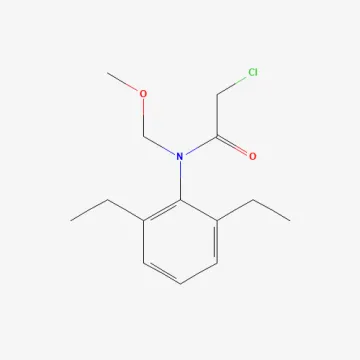
Description
Mode of action
Metachlor and related chloroacetanilide herbicides act as systemic soil-applied agents. They are primarily designed to inhibit cell division during the early germination stage of weeds, effectively stopping growth before it reaches the surface.
The active substance is absorbed through the coleoptile of grasses and the hypocotyl of broad-leaved weeds. Once absorbed, it interferes with protein synthesis and lipid metabolism, which are essential for the rapid development of young seedlings.
Because it acts on germinating seeds rather than established plants, metachlor provides a robust protective barrier in the top layer of the soil. This prevents weed competition from the very beginning of the crop cycle.
Soil moisture plays a crucial role in the activation of the compound. Without adequate soil moisture, the herbicidal activity remains dormant, which is why proper timing relative to rainfall or irrigation is essential for optimal results.
This group of herbicides is widely valued for its persistence, which helps maintain a weed-free environment for several weeks, allowing the main crop to establish itself without competition for sunlight, water, or nutrients.
What it targets
Metachlor is highly effective against a variety of annual grasses and specific broad-leaved weeds. Its primary strength lies in controlling grass species that are otherwise difficult to manage once they establish strong root systems.
The product is commonly used in maize, soybean, and sunflower fields. By suppressing weeds like foxtail and crabgrass during the early growth phase, it ensures that the crop attains a competitive advantage.
It has minimal effect on perennial weeds that regrow from rhizomes or deep roots, focusing its activity instead on seeds and emerging sprouts. This characteristic makes it a preferred preventive measure in integrated weed management programs.
Due to its selective spectrum, it is often combined with other herbicides to broaden the control range against harder-to-kill broad-leaved species, creating a balanced and effective tank mix.
- Barnyard grass (Echinochloa crus-galli)
- Foxtail (Setaria spp.)
- Large crabgrass (Digitaria sanguinalis)
- Pigweed (Amaranthus retroflexus)
Rates and timing
Application rates for metachlor are determined by soil texture and organic matter content. Soils with higher clay or organic matter content typically require higher dosages to account for the stronger adsorption capacity of the soil particles.
The herbicide is usually applied pre-plant incorporated or pre-emergence. Uniform distribution across the field is essential to ensure that the chemical film remains unbroken, providing consistent weed control.
Proper seedbed preparation is vital for achieving the desired efficacy. A finely leveled soil surface free of large clods allows the herbicide to create a uniform barrier, reducing the risk of gaps where weeds could emerge.
Timing the application to coincide with planting or immediately following it is critical. Farmers should monitor the weather forecast to avoid application just before excessive rainfall, which could wash the product out of the target zone.
Always adhere to the specific product label regarding mixing rates and safety intervals. Maintaining the correct dose is crucial to balance high weed control efficacy with crop safety and environmental responsibility.
Restrictions
One of the primary limitations of metachlor is its dependency on soil moisture. In prolonged dry conditions, the herbicide cannot move into the soil solution and effectively reach the germinating seeds, leading to reduced control.
Heavy rainfall shortly after application can lead to leaching, potentially carrying the herbicide into the crop's root zone, which might result in temporary phytotoxicity or growth retardation of the target crop.
Crop rotation planning is essential when using chloroacetanilides. Although the product degrades, its residual activity can vary depending on soil pH, temperature, and microbial activity, which may affect sensitive follow-up crops.
To mitigate the risk of weed resistance, it is recommended to rotate metachlor with herbicides featuring different modes of action. Relying solely on one herbicide class over multiple seasons should be avoided.
Personal protective equipment (PPE) is mandatory during the handling and application process. Users must take precautions to prevent spray drift onto non-target areas and ensure that runoff does not enter water bodies or sensitive habitats.
Content graph
Connections · Metachlor
Most often together:
Marketplace
Products · 7


