
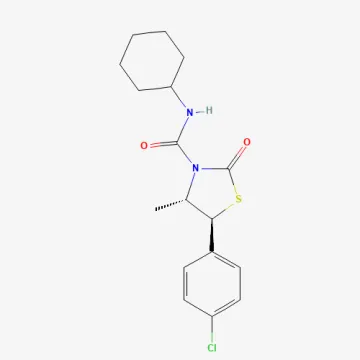
Hexythiazox
Description
Mode of action
Hexythiazox is a thiazolidine acaricide that primarily functions as an insect growth regulator (IGR). It is highly specialized for the control of plant-feeding mites, specifically targeting their early developmental stages rather than adult forms.
The mode of action involves the inhibition of chitin synthesis and the disruption of embryonic development within the eggs. When larvae or nymphs are exposed to the chemical, it interferes with their molting process, leading to the inhibition of further growth and subsequent mortality.
The compound exhibits excellent translaminar movement within leaf tissues. This capability allows it to control mites hiding on the underside of leaves or in crevices, even when spray coverage is not perfectly uniform across the entire canopy.
One of the most significant agronomic features of hexythiazox is its lack of cross-resistance with other acaricide classes. This attribute makes it a vital component in resistance management programs, allowing growers to rotate it with other chemistries effectively.
Hexythiazox provides a long residual effect, typically protecting crops for several weeks. It is also resistant to washout, ensuring consistent performance even under unpredictable environmental conditions or rainfall shortly after application.
What it targets
Hexythiazox is specifically active against mites in the Tetranychidae (spider mites) and Eriophyidae families. Key pest targets include the two-spotted spider mite, the European red mite, and various rust or gall-inducing mite species.
It is widely used in a variety of high-value crops, including deciduous fruit trees (apples, pears, stone fruits), vineyards, soybeans, vegetables in greenhouses, and various ornamental plants in nurseries.
Due to its high selectivity, hexythiazox is considered compatible with many Integrated Pest Management (IPM) systems. It generally has a low impact on predatory mites and other beneficial insects, helping to maintain a natural balance in the orchard or field.
Rates and timing
Application timing is crucial for maximizing efficacy. The product is most effective when applied at the onset of mite infestation, specifically targeting the egg-laying period or the appearance of early-stage larvae.
Dosing should be based on the local pest pressure and the density of the crop canopy. Consistent coverage is necessary to ensure that the chemical reaches all potential sites of mite activity, thereby securing the long-term control of the population.
Restrictions
To prevent the selection of resistant mite populations, it is standard practice to restrict hexythiazox applications to a single treatment per season per crop. This ensures the long-term viability of the product as a pest control tool.
Growers should avoid tank-mixing hexythiazox with highly alkaline compounds, as these conditions can cause the hydrolysis of the active ingredient, resulting in decreased efficacy and stability of the solution.
Safety regulations and pre-harvest intervals (PHI) must be strictly followed to ensure residue levels remain within the legal limits. Proper personal protective equipment (PPE) is essential when handling the concentrated form of the pesticide during mixing and application.
Status in the European Union
Approved in the EU
- CAS number
- 78587-05-0
- Category (EU)
- AC - Acaricide
- Approved from
- 01.06.2011
- Approval until
- 31.01.2027
- ADI
- 0.03 mg/kg bw/day
- ARfD
- Not appl.
- AOEL
- 0.009 mg/kg bw/day
EU status is for reference only and does not replace national registration in your country.