
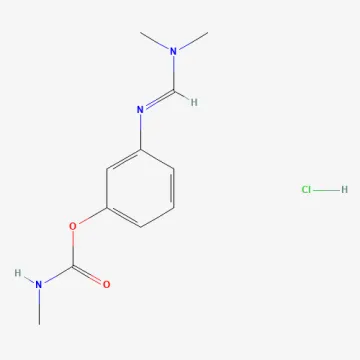
Formetanate
Description
Mode of action
Formetanate belongs to the carbamate chemical class and acts as a potent insecticide and acaricide with significant contact and stomach activity.
The primary mode of action is the inhibition of the enzyme acetylcholinesterase within the pest's nervous system, causing paralysis and rapid mortality.
It is known for its ability to penetrate the cuticle of mites and insects effectively, ensuring quick action even against resistant pest populations.
A distinctive feature of formetanate is its ovicidal activity, which allows it to target not only adults but also the eggs and larvae of various mite species.
Because it lacks systemic movement within plant tissues, achieving thorough and uniform spray coverage of all foliage surfaces is critical for successful control.
What it targets
Formetanate is primarily used for the control of phytophagous mites, including the spider mite, which are major pests in intensive agriculture.
In addition to its acaricidal properties, the compound is effective against several sucking insect pests, such as thrips and leaf-mining flies.
The scope of application includes pome fruits like apples and pears, citrus groves, and various ornamental plants grown in both greenhouses and open fields.
It serves as an essential tool in integrated pest management programs, particularly when rapid intervention is needed to protect high-value crops.
By controlling both motile stages and eggs, formetanate helps to disrupt the life cycle of pests effectively, preventing rapid population rebounds.
Rates and timing
Application rates for formetanate should be adjusted based on the specific pest density, the crop type, and the severity of the infestation.
Applications are recommended at the onset of pest activity or once monitoring thresholds indicate a need for intervention to prevent significant damage.
Proper spray equipment calibration is necessary to ensure that the active ingredient reaches the underside of leaves, where mites typically congregate.
To avoid the development of resistance, it is advisable to rotate formetanate with other classes of acaricides throughout the growing season.
Always refer to the specific product label for recommended dilution rates and compatibility information before mixing with other plant protection products.
Restrictions
Formetanate is classified as highly toxic to mammals, making the use of strict personal protective equipment (PPE) mandatory during handling and application.
The substance is extremely hazardous to bees and other beneficial insects; therefore, application must be avoided during bloom or when bees are foraging.
Strict adherence to pre-harvest intervals (PHI) is required to ensure that pesticide residues on crops do not exceed established safety standards.
Prevent runoff and drift into waterways, as formetanate poses a high risk to aquatic organisms, including fish and various invertebrates.
All operations should be conducted by trained personnel who are familiar with the specific handling procedures for toxic carbamate-based compounds.
Status in the European Union
Approved in the EU
- CAS number
- 23422-53-9
- Category (EU)
- AC - Acaricide
- Approved from
- 01.10.2007
- Approval until
- 30.09.2026
- ADI
- 0.004 mg/kg bw/day
- ARfD
- 0.005 mg/kg bw
- AOEL
- 0.004 mg/kg bw/day
EU status is for reference only and does not replace national registration in your country.