

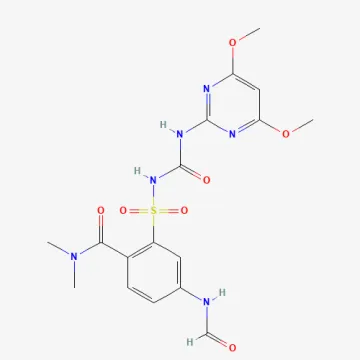
Description
Mode of action
Foramsulfuron belongs to the sulfonylurea chemical class. It is a systemic herbicide that is rapidly absorbed by the leaves and stems of weeds, subsequently translocating through the phloem and xylem to the meristematic tissues.
The mode of action is based on the inhibition of the acetolactate synthase (ALS) enzyme. Blocking this enzyme stops the biosynthesis of essential amino acids such as valine and isoleucine, which immediately halts cell division.
Visual symptoms of herbicide efficacy include chlorosis and growth stunting, appearing just days after application. Complete plant death typically occurs within 1 to 3 weeks, depending on environmental conditions.
The efficiency of foramsulfuron is significantly enhanced when combined with safeners (such as isoxadifen-ethyl), which ensure selectivity and protect the maize crop from potential phytotoxicity.
The compound is rainfast, meaning it is absorbed by the plant within the first few hours following the application of the spray solution to the leaf surface.
What it targets
This active ingredient provides a broad spectrum of activity against annual and perennial grasses, as well as many broadleaf weeds. It is considered a standard for maize crop protection.
Highly susceptible species include couch grass (Elymus repens), barnyard grass, foxtail species, Johnsongrass (Sorghum halepense), and various amaranth species.
The herbicide effectively suppresses cereal volunteers and controls hard-to-eradicate weeds that compete with maize for light, water, and essential nutrients.
To improve control of broadleaf weeds, foramsulfuron is frequently used in tank mixtures with other herbicide classes, which helps prevent the development of resistant weed populations.
The substance exhibits high biological activity even under suboptimal weather conditions, ensuring clean fields throughout the key stages of crop development.
Rates and timing
The application rate of foramsulfuron depends on the formulation concentration and the growth stage of the target weeds. Optimal treatment timing occurs during the active growth phase.
For annual grasses and broadleaf weeds, application is most effective at the 2- to 4-leaf stage. Perennial weeds, such as couch grass, are better controlled when they reach a height of 10–15 cm.
Field application is generally performed between the 2- and 6-leaf stage of the maize crop, ensuring maximum selectivity for the crop and optimal effectiveness against weed competitors.
Temperature regimes must be considered: the ideal conditions range from +15°C to +25°C, as these conditions favor metabolic activity in weeds, thereby enhancing herbicide uptake.
Using an appropriate spray volume is essential for uniform leaf coverage; typically, 200–300 liters of spray solution per hectare are recommended for effective control.
Restrictions
Foramsulfuron should not be applied if the maize crop is under stress due to extreme temperature fluctuations, drought, waterlogging, or severe pest damage.
A critical restriction is the prohibition of application if organophosphate insecticides have been recently used on the crop, as this may lead to severe phytotoxicity.
Mechanical cultivation should be avoided for at least one week before or after herbicide application to ensure optimal systemic distribution of the chemical within the plant tissues.
Strict adherence to personal protective equipment protocols is mandatory when handling the product, including gloves, goggles, and respiratory protection to prevent skin and mucosal contact.
The product must be stored in its original, sealed containers in cool, dry warehouse facilities, kept out of reach of children and animals, and away from food supplies.
Content graph
Connections · Foramsulfuron
Most often together:
Marketplace
Products · 11


MaiSTer 62WG w.g.
фірмі Байєр КропСаєнс АГ, м.Франкфурт, Німеччина
Herbicides
0
0
·
60
1 offer
109.87 €per 1 l
Buy


