
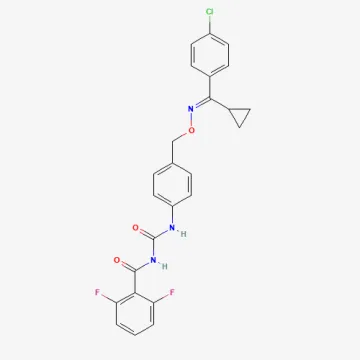
Flucycloxuron
Description
Mode of action
Flucycloxuron belongs to the benzoylurea chemical class. It functions as an insect growth regulator, primarily acting as a chitin synthesis inhibitor, which disrupts the development of insect larvae during their molting process.
The core mechanism of action involves interfering with the deposition of chitin in the exoskeleton of insects. When exposed to the substance, larvae fail to form a functional cuticle, leading to fatal malformations during the growth and shedding phases.
The compound exhibits strong ovicidal and larvicidal activity. It is most effective when applied at the early stages of insect development, particularly during egg-laying or early larval emergence, preventing the population from establishing.
Although it does not have systemic properties, flucycloxuron shows good contact activity and some translaminar effect within plant tissues. This helps maintain protection on leaf surfaces for a period, provided the application covers the target area thoroughly.
This substance is noted for its specificity. By interrupting the molting cycle, it effectively reduces pest pressure while often showing a better safety profile for various predatory insects and parasitoids compared to broad-spectrum insecticides.
What it targets
Flucycloxuron is primarily utilized to control a variety of lepidopteran pests. It is highly effective against species that have developed resistance to traditional organophosphate and pyrethroid insecticides.
Key agricultural targets include several species of leafrollers, codling moths, and other caterpillars that cause significant damage to fruit crops. It is also instrumental in managing populations of leaf-mining insects.
In orchards, such as apple and pear plantations, flucycloxuron plays a critical role in preserving the quality of fruit. By preventing larval feeding, it reduces aesthetic damage and ensures a higher marketable yield.
Besides orchards, the insecticide is applicable to various horticultural crops to manage harmful pest complexes. It is a valuable tool for farmers aiming to keep pest populations below the economic injury level.
Due to its specific mode of action, it is frequently integrated into programs that aim for sustainable pest management, helping growers balance efficacy with environmental stewardship.
Rates and timing
The timing of application is crucial for the efficacy of flucycloxuron. It should be applied strategically, coinciding with the peak period of pest egg deposition or the appearance of early-instar larvae to ensure maximum disruption of their growth cycle.
Spray volume must be calibrated to ensure complete and uniform coverage of the foliage. Inadequate coverage can result in reduced effectiveness, as the larvae must come into direct contact with the residue or ingest it during feeding.
To avoid the development of pest resistance, the number of applications per season is typically limited. It is recommended not to use products from the benzoylurea group consecutively without rotating with other chemical classes.
Weather conditions at the time of spraying significantly influence performance. Applications are best carried out under calm, dry weather, avoiding periods of extreme temperature or high winds that could lead to spray drift.
When preparing spray solutions, always adhere to the specific dilution rates provided by the manufacturer. Mixing with incompatible substances, such as those with highly alkaline reactions, can neutralize the active ingredient and render it ineffective.
Restrictions
While flucycloxuron is generally considered to have low toxicity to mammals, safety precautions must be followed during handling and application. Use standard personal protective equipment, including gloves, goggles, and respirators, to prevent direct exposure.
The compound should not be released into waterways or drainage systems. Its stability in the environment requires careful management to avoid contamination of aquatic habitats and non-target surrounding areas.
Preventing resistance is a primary management concern. Users should adopt a resistance management strategy by alternating flucycloxuron with insecticides that feature different modes of action to ensure long-term effectiveness.
Storage must be handled in original, tightly sealed containers within a dedicated, cool, and dry pesticide storage area. Ensure the site is inaccessible to unauthorized persons, children, and pets, and separated from foodstuffs.
During application, avoid spraying directly onto flowering plants when pollinators are actively foraging. Adhering to local regulations regarding buffer zones and application times is essential for responsible pesticide use.
Status in the European Union
Not approved in the EU
- CAS number
- 94050-52-9
- Category (EU)
- AC - Acaricide
EU status is for reference only and does not replace national registration in your country.