
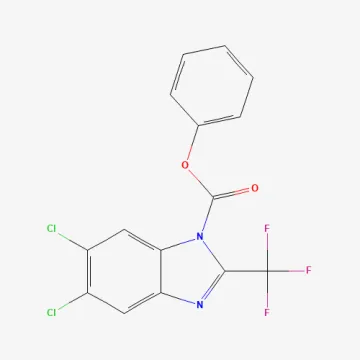
Fenazaflor
Description
Mode of action
Fenazaflor is an active ingredient belonging to the benzimidazole chemical class, functioning as a potent insecticide and acaricide with primary contact activity. Its biological efficacy is rooted in the disruption of oxidative phosphorylation within the target cells.
By effectively uncoupling this vital metabolic process, Fenazaflor halts the production of ATP in the cells of mites and insects. This lack of energy leads to the rapid physiological collapse and subsequent death of the pests.
The substance demonstrates strong initial toxicity upon contact, making it highly suitable for rapid knock-down control of active pest populations. It impacts both mobile stages of mites and occasionally their eggs, depending on the specific environmental conditions.
Fenazaflor is known for its relatively stable profile on plant surfaces, providing residual protection against subsequent mite colonization. It penetrates the cuticle effectively, ensuring that pests feeding on treated foliage are quickly eliminated.
A significant advantage of this compound is its efficacy against mite populations that have developed resistance to organophosphate pesticides, offering a viable solution for integrated resistance management programs.
What it targets
The primary targets for Fenazaflor are phytophagous mites, particularly members of the Tetranychidae family, including the common spider mite. It is extensively used to protect orchards and ornamental plantations.
It is specifically recommended for apple, pear, and stone fruit orchards where mite infestations can lead to significant photosynthetic damage, stunted growth, and reduced yield. Protecting these crops is crucial for maintaining both fruit quality and tree health.
Apart from spider mites, Fenazaflor may exhibit secondary effects against certain soft-bodied insects, helping to reduce the overall pest pressure in agricultural systems. This makes it a versatile tool for growers managing mixed pest populations.
When applied correctly, it prevents leaf yellowing, bronzing, and premature senescence caused by the constant sap-sucking activity of mites, thereby preserving the plant's metabolic capacity throughout the growing season.
The use of Fenazaflor ensures that the plant canopy remains vigorous, allowing for better fruit development and maturation even under conditions of high pest infestation pressure.
Rates and timing
Application rates of Fenazaflor are determined by the severity of the infestation and the specific growth stage of the crop. Treatments should be initiated at the onset of pest activity, ensuring that the economic injury level is not exceeded.
Sufficient water volume is essential to ensure thorough coverage of the foliage, particularly the undersides of leaves where mites congregate and lay their eggs. High-quality application equipment is recommended to achieve uniform distribution.
The number of applications per season is strictly limited to prevent the selection of resistant mite strains and to minimize residues on the final produce. Growers must adhere to the rotation of different modes of action.
When mixing with other plant protection products, compatibility tests are necessary to ensure the chemical stability of the spray mixture and to prevent any reduction in the efficacy of the active ingredients.
The pre-harvest interval (PHI) must be strictly respected to ensure consumer safety and compliance with international maximum residue limit (MRL) standards for agricultural products.
Restrictions
Fenazaflor must be handled with standard personal protective equipment, including gloves, goggles, and respiratory masks, to prevent skin and eye contact, as well as inhalation of spray particles during preparation and application.
The compound is hazardous to beneficial insects, especially honeybees. Consequently, it should be applied during periods when pollinators are inactive, such as early morning or late evening, and never during the full bloom period.
Strict drift management protocols must be in place to avoid the contamination of adjacent crops, livestock areas, or aquatic environments. Buffer zones are required near water bodies and residential areas.
Storage should take place in a cool, dry, and well-ventilated area designated for pesticides. Containers must remain tightly sealed, clearly labeled, and stored out of reach of unauthorized persons and pets.
Disposal of unused product and empty containers must follow local environmental regulations to prevent soil and water contamination. Triple-rinsing of equipment is a mandatory practice after application to ensure safety.
Status in the European Union
Not approved in the EU
- CAS number
- 14255-88-0
- Category (EU)
- AC - Acaricide
EU status is for reference only and does not replace national registration in your country.