
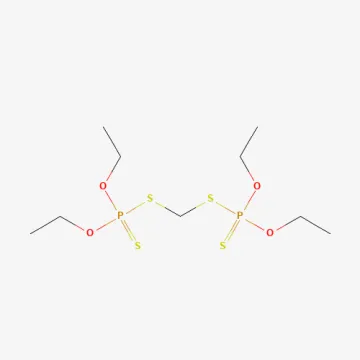
Ethion
Description
Mode of action
Ethion belongs to the organophosphate chemical class and functions primarily as a potent cholinesterase inhibitor within the nervous systems of pests.
By preventing the normal breakdown of acetylcholine, the substance causes continuous nerve stimulation, resulting in paralysis and death of the target organism.
It acts through both contact and ingestion, making it a versatile tool against various soft-bodied and armored insects and mites.
The chemical profile of ethion allows for significant penetration through insect cuticles and the outer layers of mite eggs, providing systemic-like efficacy.
Its persistence in the environment is moderate, offering a window of protection that helps to reduce pest pressure following a single application.
What it targets
Ethion is predominantly used in agriculture to control populations of mites, particularly spider mites that damage leaves and fruit.
It is highly effective against scale insects, mealybugs, aphids, and various leafhoppers that cause significant yield losses in orchards.
The compound is a staple in integrated pest management programs for citrus, deciduous fruit trees, and various ornamental plantations.
It is specifically valued for its ability to target dormant stages of pests, serving as a reliable early-season cleanup spray.
- Spider mites
- Scale insects
- Aphids
- Mealybugs
Rates and timing
Application rates for ethion are precisely determined by the growth stage of the crop and the specific pest species being managed.
Proper timing is essential, with treatments typically timed to coincide with the most vulnerable developmental stages of the pest population.
Thorough coverage of the foliage, stems, and trunk is mandatory for maximum efficacy, as the contact action requires direct exposure to the chemical.
Farmers must adhere to recommended spray intervals to ensure efficacy while maintaining harvest safety standards for the final agricultural products.
Monitoring pest density in the field is advised to prevent unnecessary applications and to help in managing the potential for chemical resistance.
Restrictions
Due to its toxicological profile, ethion requires stringent safety protocols, including the use of certified protective gear during mixing and application.
It is highly toxic to honeybees and other beneficial insects; therefore, application during bloom or active foraging periods is strictly prohibited.
Users must avoid mixing ethion with highly alkaline substances, which can lead to chemical degradation and a significant reduction in active performance.
Environmental safety measures must be strictly enforced to prevent runoff into water sources, as the chemical poses severe risks to aquatic ecosystems.
Storage must always be in the original, labeled container within a secured, cool, and well-ventilated area away from food or animal feed.
Status in the European Union
Not approved in the EU
- CAS number
- 563-12-2
- Category (EU)
- AC - Acaricide
EU status is for reference only and does not replace national registration in your country.