
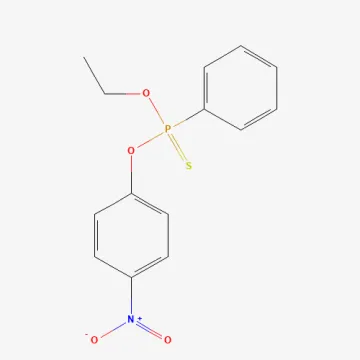
EPN
Description
Mode of action
EPN (ethylene producers) are a group of chemical compounds that act by releasing ethylene, a vital phytohormone, directly into plant tissues upon application.
Ethylene plays a critical role in controlling various physiological processes, including fruit ripening, leaf abscission, and responses to environmental stressors.
By mimicking the natural plant hormone, EPN substances initiate biochemical pathways that accelerate the maturation and senescence of fruits.
Unlike pesticides intended to kill pathogens, these substances serve as plant growth regulators (PGRs) that modulate plant hormonal balance.
The efficiency of EPN relies on the uptake rate through leaves and the subsequent gradual conversion of the compound into gaseous ethylene within the plant cells.
What it targets
In modern agronomy, EPN substances are primarily used to manage harvest timing and enhance fruit quality for commercial distribution.
Specific use cases include:
- Uniform ripening of tomatoes, peppers, and other fruiting vegetables.
- Enhancing color development in fruits to meet market standards.
- Promoting the formation of the abscission layer to facilitate mechanical harvesting.
- Reducing harvest labor costs by synchronizing crop maturity across the entire field.
These substances are also deployed in orchards to thin out excessive fruit loads, helping to maintain the health and vigor of the trees.
By streamlining the maturation process, EPN allows producers to harvest crops more efficiently while minimizing waste.
Rates and timing
The dosage of EPN must be strictly calculated based on the crop growth stage and ambient environmental conditions to avoid negative side effects.
Applications should be timed to avoid high-temperature peaks, which can trigger an excessively rapid ethylene release and damage the plant.
Users must observe the mandatory pre-harvest interval (PHI) to ensure the safety and quality of the final agricultural product.
It is recommended to prepare the spray solution fresh, as stability of the active ingredient may decrease over time if left in standing water.
Uniform coverage is essential for ensuring that all target fruits reach maturity at the same time, preventing uneven harvest results.
Restrictions
Low temperatures are a major limiting factor, as the conversion rate of EPN into ethylene slows down significantly under cool conditions.
Plants under water or nutrient stress should not be treated, as the application of EPN could exacerbate physiological weakness.
Drift prevention is vital, as ethylene exposure can cause unintended leaf senescence or shoot deformation in nearby non-target crops.
Operators must wear appropriate personal protective equipment (PPE) to avoid irritation when handling chemical concentrated mixtures.
Store these products in original, tightly closed containers in a cool, dark area, away from the reach of children and livestock.
Status in the European Union
Not approved in the EU
- CAS number
- 2104-64-5
- Category (EU)
- AC - Acaricide
EU status is for reference only and does not replace national registration in your country.