
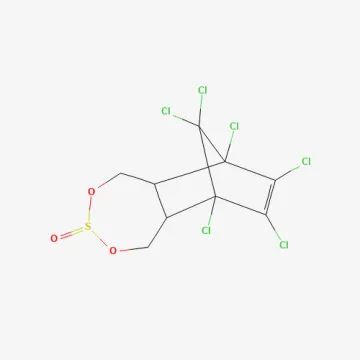
Endosulfan
Description
Mode of action
Endosulfan is an organochlorine insecticide and acaricide that belongs to the cyclodiene group, widely recognized for its high potency against various pests.
The chemical acts through both contact and ingestion, providing a dual-action effect that ensures high mortality rates in target insect populations.
The primary mechanism of action involves the inhibition of GABA-regulated chloride channels, which prevents the proper function of the insect's nervous system.
This disruption leads to uncontrolled nerve impulses, causing hyperexcitability, tremors, convulsions, and eventually total paralysis and death of the pest.
Due to its chemical stability, Endosulfan provides significant residual control, maintaining effectiveness on treated surfaces for an extended period.
What it targets
Endosulfan is used to control a diverse range of pests, including larvae of Lepidoptera, Coleoptera, and several species of mites and aphids.
It is particularly effective against stubborn pests that have developed resistance to other types of insecticides, such as organophosphates or pyrethroids.
The product is suitable for application on a variety of crops, including cotton, tea, coffee, grains, and various horticultural vegetable crops.
In greenhouses, it helps manage outbreaks of whiteflies and other sap-sucking insects that can quickly devastate commercial vegetable productions.
Despite its efficacy, the target range is broad and includes non-target beneficial insects, which poses a significant challenge for integrated pest management.
Rates and timing
Application rates for Endosulfan are typically calculated based on the specific crop and the severity of infestation, ranging from 0.5 to 2.0 kg a.i. per hectare.
Timing of application is crucial and should coincide with the early stages of pest development to achieve the best results before major crop damage occurs.
Pre-harvest intervals (PHI) are strictly enforced and vary by country, usually requiring at least 20 to 30 days between the last spray and harvesting.
Spray equipment must be calibrated to ensure uniform distribution of the insecticide, especially in dense foliage where pests tend to hide.
Mixing and loading should be performed in well-ventilated areas to prevent inhalation of concentrated vapors or accidental skin contact with the product.
Restrictions
Endosulfan is classified as a persistent organic pollutant and is subject to international bans due to its tendency to accumulate in the environment and food chain.
It poses extreme risks to aquatic life, including fish and aquatic invertebrates, necessitating strict buffer zones near rivers, lakes, and other water bodies.
The compound is highly toxic to bees and beneficial predatory insects, so its application during flowering is strictly forbidden in most agricultural protocols.
Personal Protective Equipment (PPE) is mandatory, as the substance can be absorbed through the skin, potentially leading to acute or chronic toxicity in humans.
Because of environmental and health concerns, the production and usage of Endosulfan have been phased out or severely restricted under the Stockholm Convention.
Status in the European Union
Not approved in the EU
- CAS number
- 115-29-7
- Category (EU)
- AC - Acaricide
- ADI
- 0.006 mg/kg bw/day
- ARfD
- 0.02 mg/kg bw
EU status is for reference only and does not replace national registration in your country.