
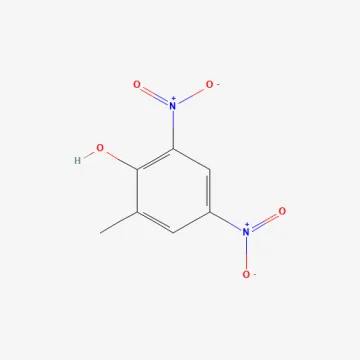
DNOC
Description
Mode of action
DNOC (dinitro-ortho-cresol) is a chemical compound belonging to the nitrophenol class, which acts primarily as an uncoupler of oxidative phosphorylation.
By interfering with cellular respiration, the substance inhibits the production of ATP, depriving pests and pathogens of the energy required for survival.
The product exhibits strong contact activity, meaning success relies heavily on thorough coverage of the target area with the working solution.
Because DNOC is highly phytotoxic to green plant tissues, its application is strictly limited to the dormant season of the crop.
Its molecular structure allows it to penetrate the protective layers of overwintering pest stages and fungal spores, providing deep sanitation of bark and branches.
What it targets
DNOC serves as a multifunctional pesticide, demonstrating clear insecticidal, acaricidal, fungicidal, and herbicidal effects in various agricultural settings.
It is widely used to control overwintering populations of scale insects, mites, aphids, and leafrollers in orchards during the winter-spring period.
As a fungicide, it is effective against pathogens causing scab, moniliosis, leaf curl, and other fungal diseases common to fruit-bearing trees.
The herbicidal properties are utilized for controlling a broad spectrum of annual dicotyledonous weeds in cereal crops and fallow soil preparation.
- Overwintering scale insects
- Mites and aphids
- Fungal spores (scab, moniliosis)
- Annual dicot weeds
Rates and timing
Applications are typically scheduled during the deep dormancy phase of plants, specifically before the onset of sap flow and bud break.
The volume of working fluid ranges from 500 to 1500 liters per hectare, depending on tree size, canopy density, and the degree of pest infestation.
When applying as a herbicide, exact dosage calculation is essential, taking into account the weed species composition and crop growth stages.
Applying the product during active vegetation is prohibited as it causes severe chemical burns to leaves, flowers, and developing shoots.
Uniformity in spray application is crucial to ensure that all surfaces are adequately treated without risking excessive accumulation in any single spot.
Restrictions
DNOC is highly toxic to humans and other mammals; therefore, strict adherence to personal protective equipment protocols is mandatory during all handling stages.
The substance poses a significant threat to honeybees and beneficial insects, prohibiting use during flowering periods or when weeds are in bloom.
Environmental regulations regarding the use of DNOC must be followed strictly due to the potential for soil accumulation and water contamination.
Storage must occur in specialized, secure, and dry facilities that meet stringent fire safety and chemical containment standards.
Disposal of unused product and empty packaging must comply with local hazardous waste management laws to prevent environmental hazards.
Status in the European Union
Not approved in the EU
- CAS number
- 534-52-1
- Category (EU)
- AC - Acaricide
EU status is for reference only and does not replace national registration in your country.