

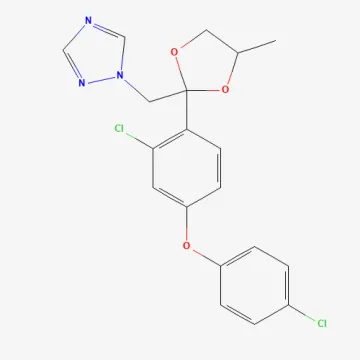
Description
Mode of action
Difenoconazole is a systemic broad-spectrum fungicide belonging to the triazole chemical class. It is widely used to provide both preventative and curative control against various fungal pathogens.
The mechanism of action involves the inhibition of ergosterol biosynthesis in the fungal cell membrane. By disrupting the cell wall formation, the fungicide effectively halts the growth and spread of the mycelium.
Upon application, the substance is rapidly absorbed by the plant tissues and moves systemically throughout the plant. This acropetal movement ensures that both treated and newly developed leaves are protected.
Difenoconazole demonstrates excellent rainfastness shortly after application, which is a significant advantage when conducting field operations under unpredictable weather conditions.
The residual protection provided by the substance is long-lasting, typically ranging from 10 to 21 days, which helps in reducing the total number of sprays per season.
What it targets
This active substance is highly effective against a broad range of pathogens, including Ascomycetes, Basidiomycetes, and Deuteromycetes. It is essential for managing diverse agricultural threats.
Key diseases controlled by Difenoconazole include:
- Powdery mildew across various crops
- Scab in fruit trees
- Leaf spot and blight (Alternaria, Septoria)
- Phoma and Cercospora infections
- Various rusts and fruit rots
The fungicide is primarily used on a variety of crops, including cereals, vegetables, fruit orchards, and potatoes, to ensure healthy yields and prevent widespread crop failure.
Early application is recommended to curb the infection cycle effectively, as the substance shows superior performance when used at the first signs of disease symptoms.
Additionally, Difenoconazole is often formulated in seed treatments to protect germinating crops against both seed-borne and soil-borne fungal pathogens.
Rates and timing
Application rates vary based on the specific crop and the severity of the disease pressure. Typically, field crops require doses between 0.15 and 0.5 liters per hectare.
The timing of the application is critical for success. It should be applied when the environmental conditions favor the development of fungal diseases and before significant damage occurs.
To maintain long-term efficacy, it is crucial to follow local guidelines regarding the maximum number of applications per season to prevent the development of resistant fungal populations.
When mixing with other agrochemicals, it is essential to ensure physical and chemical compatibility to avoid any reduction in the product's effectiveness or damage to the plants.
Pre-harvest intervals (PHI) must be strictly followed, as specified on the product labels, to ensure that residue levels in the final crop meet international food safety standards.
Restrictions
A primary concern with Difenoconazole use is the potential for fungal resistance. Integrated pest management (IPM) practices, such as rotating with fungicides of different modes of action, are strongly advised.
The substance is classified as moderately toxic to aquatic life. Therefore, applications near water bodies, rivers, or drainage systems must be avoided to prevent contamination.
Operators must wear appropriate personal protective equipment (PPE), including chemical-resistant gloves, eye protection, and respiratory gear, during mixing and application to prevent exposure.
In the event of accidental contact, immediate decontamination is necessary. Follow the specific first aid procedures provided on the Material Safety Data Sheet (MSDS) and seek medical advice.
Storage must be in a cool, dry, and well-ventilated area, kept strictly in the original container, and placed out of reach of children and unauthorized personnel.
Regulatory
Status in the European Union
Approved in the EU
- CAS number
- 119446-68-3
- Approved from
- 01.01.2009
- Approval until
- 31.01.2028
- ADI
- 0.01 mg/kg bw/day
- ARfD
- 0.16 mg/kg bw
- AOEL
- 0.16 mg/kg bw/day
EU legislation
EU status is for reference only and does not replace national registration in your country.
Content graph
Connections · Difenoconazole
Most often together:
Marketplace
Products · 118
All 118
Fungicides 107
Insecticides, Acaricides 8
Plant Growth Regulators 2
Herbicides, Desiccants 1




Protect - Fungus
Innovative company "Agro Protection", LLC
Fungicides
0
0
·
70
20 offers
38.99 €per 1 l
Buy


Setera 375 SC
Сингента Агро С.А.С.,хутір Рувіллак, Аг-Вів, Франція.
Fungicides
0
0
·
51
4 offers
22.47 €per 1 l
Buy


SAMSHIT
ТОВ «Фабрика агрохімікатів», Черкаси, Україна
Fungicides
0
0
·
50
25 offers
1.28 €per 1 l
Buy


