
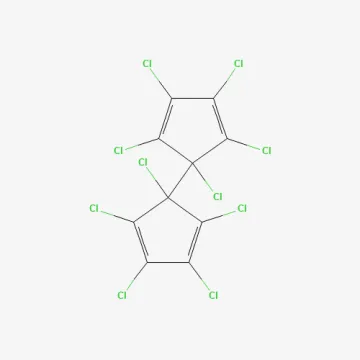
Dienochlor
Description
Mode of action
Dienochlor is a highly effective active ingredient belonging to the group of organochlorine compounds. It is classified as a specific contact-acting acaricide that efficiently suppresses the biological activity of various species of plant-feeding mites at different stages of their development.
The mechanism of action of the substance is based on disrupting normal metabolic processes within the pest's organism. Upon contact with the mite's body surface, dienochlor gradually penetrates the cuticle, inducing paralysis of the nervous system and the subsequent death of the specimen.
One of the key features of dienochlor is its high stability when exposed to sunlight and atmospheric precipitation. This property allows products based on it to maintain protective functions over an extended period, ensuring long-term control of pest populations.
The product exhibits significant contact activity; therefore, the effectiveness of the treatment directly depends on the thoroughness of applying the working solution to all parts of the plant, including the underside of the leaves. Uniform coverage is critical to blocking the movement and reproduction pathways of mites.
It is important to consider that dienochlor has virtually no systemic properties and therefore does not redistribute within plant tissues. Consequently, full coverage of the treated surface is a determining factor for the success of acaricidal treatment.
What it targets
Dienochlor is specifically applied for the control of dangerous pests from the spider mite family. It is particularly effective against species that cause severe damage to ornamental and agricultural crops in greenhouse conditions.
The primary targets are various life cycle stages of the pest, from larvae and protonymphs to adults. This allows for the control of mite colony populations, preventing their rapid reproduction and damage to the assimilation surface of plants.
The list of targets against which the substance acts includes species such as the common spider mite and other representatives of the suborder Acariformes. The substance successfully prevents leaf necrosis and premature leaf drop caused by parasite activity.
Application of this substance is recommended at the first signs of pest appearance or upon reaching the economic threshold of damage. Timely use helps avoid the loss of commercial quality of ornamental plants and yield reduction in greenhouse complexes.
Due to its selective action, dienochlor minimizes negative impact on beneficial entomophages, provided that application regulations are followed. This makes it an important tool in integrated plant protection systems against mites.
Rates and timing
Application rates of dienochlor depend on the density of pest populations and the species composition of the protected crop. The product is typically used as an emulsifiable concentrate, which is diluted with water in a strictly defined ratio according to the manufacturer's instructions.
Timing of treatments is determined by monitoring plant infestation. It is recommended to begin spraying immediately after detecting the first colonies, as mites possess high reproduction rates under elevated temperature conditions.
The frequency of treatments is established based on the substance's protective period. On average, the interval between repeated sprays ranges from 7 to 14 days, which allows for the elimination of new generations of pests that have hatched from eggs after the initial treatment.
When working in greenhouses, it is extremely important to consider the microclimate. High humidity and temperature can affect the evaporation rate of the solution, so the optimal time for treatment is considered to be early morning or evening hours, away from direct sunlight.
After completing operations, it is necessary to ensure the proper disposal of leftover working solution. Discharging the product into sewage systems or natural water bodies is strictly prohibited, as regulated by sanitary standards for handling pesticides.
Restrictions
Working with dienochlor requires strict adherence to personal protective measures. Operators must use specialized clothing, gloves, safety goggles, and respirators to prevent contact with skin or inhalation of the product.
There are strict environmental limitations on the use of this substance. Due to its persistence in the environment, it is necessary to prevent the product from entering fishery water bodies, as it can be toxic to aquatic fauna.
It is not recommended to carry out treatments during periods of high activity of bees and other pollinators. Although the substance is positioned as a specific acaricide, adherence to regulations for the protection of beneficial insects is a mandatory requirement for environmental safety.
Storage of dienochlor must be carried out in specially equipped, dry warehouse facilities with restricted access. Containers must be hermetically sealed, and the storage area must be marked with warning signs and provided with decontamination equipment.
In the event of poisoning symptoms or accidental spills of the product, immediate first aid measures must be taken, and specialized services must be contacted. Knowledge of safety regulations is an integral part of working with any pesticides.
Status in the European Union
Not approved in the EU
- CAS number
- 2227-17-0
- Category (EU)
- AC - Acaricide
EU status is for reference only and does not replace national registration in your country.