
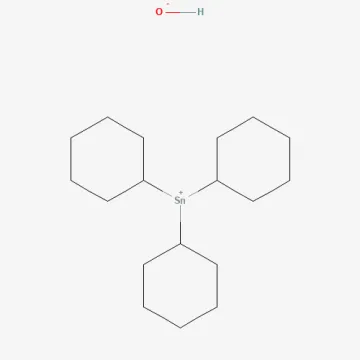
Cyhexatin
Description
Mode of action
Cyhexatin belongs to the organotin group of compounds and functions as a highly effective contact acaricide. Its primary purpose is the control of mobile stages of mites on various agricultural crops.
The mode of action is based on the inhibition of oxidative phosphorylation within the mite's mitochondria. This process blocks energy metabolism at the cellular level, leading to paralysis and the eventual death of the pest.
A key characteristic of this compound is the lack of systemic activity. The product does not penetrate plant tissues; therefore, thorough coverage of leaf surfaces with the spray solution is critical for achieving optimal efficacy.
Cyhexatin exhibits high initial toxicity against adults and larvae while possessing significant residual activity, remaining effective on the leaf surface for several weeks following application.
Due to its specific chemical composition, the substance requires strict adherence to temperature guidelines during application, as efficacy can fluctuate based on environmental conditions and pest population dynamics.
What it targets
The primary use of this substance is the control of various phytophagous mite species, including spider mites, fruit mites, and brown mites. It is especially effective against populations that have developed resistance to other classes of acaricides.
The compound is widely used for the protection of fruit crops, such as apples, pears, peaches, and grapevines. In some regions, it is also applied to ornamental plants and specific field-grown vegetable crops.
It impacts all mobile life stages of the mite, including nymphs, larvae, and adults. This helps suppress population growth early in the season and prevents damage to foliage and fruit quality.
Cyhexatin does not show significant ovicidal activity against the eggs of many mite species; therefore, a secondary application may be required after a specified interval if the pest infestation level is high.
The efficacy of the compound against various mite species is supported by long-term field use in intensive orchard management, where consistent control is required throughout the growing season.
Rates and timing
Application rates depend on the specific crop, the level of infestation, and the type of spraying equipment used. Generally, the concentration must ensure complete wetting of the entire leaf surface to achieve the desired result.
For orchard applications, it is crucial to spray before the mass hatching of larvae from eggs to effectively reduce population density at the beginning of the season.
Pre-harvest intervals must be strictly observed in accordance with the regulations for each specific crop to ensure the safety of the final product for consumers.
Application is recommended during morning or evening hours in calm weather conditions to ensure uniform distribution of droplets and minimize the risk of spray drift outside the treated area.
It is not recommended to conduct more than two treatments per season with the same active ingredient to avoid the development of resistance. Alternating with acaricides from different chemical classes is advised.
Restrictions
Cyhexatin requires careful handling due to its toxicity to humans and mammals. When working with the concentrate, the use of personal protective equipment for respiratory, skin, and eye protection is mandatory.
The product requires adherence to environmental protection measures. Contamination of water bodies, drainage systems, or habitats of beneficial insects must be avoided at all costs.
Storage must be maintained in original containers in dry, cool, and well-ventilated areas, kept away from children, unauthorized personnel, and animals.
Special attention should be given to cleaning the sprayer after use. Remaining spray solution must be disposed of in accordance with local environmental regulations regarding pesticide management.
Do not mix this acaricide with alkaline substances or strong fertilizers without preliminary compatibility testing, as such combinations may reduce the biological efficacy of the active substance.
Status in the European Union
Not approved in the EU
- CAS number
- 13121-70-5
- Category (EU)
- AC - Acaricide
- ADI
- 0.003 mg/kg bw/day
- ARfD
- 0.02 mg/kg bw
EU status is for reference only and does not replace national registration in your country.