
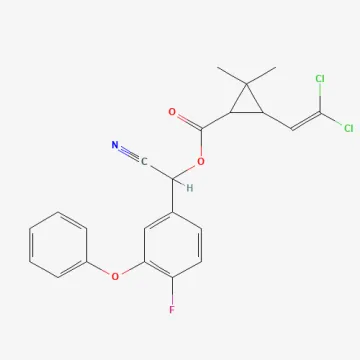
Cyfluthrin
Description
Mode of action
Cyfluthrin is a potent active ingredient belonging to the second-generation synthetic pyrethroid chemical class. It acts primarily on the nervous system of target insects by disrupting the function of voltage-gated sodium channels in nerve cell membranes.
The mode of action involves preventing the normal closing of sodium channels, which triggers continuous nerve impulses. This leads to membrane depolarization, resulting in rapid paralysis and subsequent death of the insect.
The compound provides both contact and stomach action, meaning efficacy is achieved through direct spraying on pests or by the insects consuming treated plant foliage.
One of the primary advantages of cyfluthrin is its rapid "knockdown effect," which causes pests to cease feeding almost immediately after contact, effectively limiting crop damage.
Due to its chemical stability, cyfluthrin remains effective on plant surfaces even when exposed to sunlight and varying temperatures, ensuring a persistent residual effect against pest re-infestation.
What it targets
Cyfluthrin is a broad-spectrum insecticide used extensively to control a wide range of agricultural pests across various crop systems.
- Lepidoptera (caterpillars, loopers, leaf miners)
- Coleoptera (beetles, weevils)
- Hemiptera (aphids, leafhoppers)
- Thysanoptera (thrips)
Its high lipophilicity allows the active ingredient to easily penetrate the insect's cuticle and the waxy layer of leaves, ensuring control even for pests that are typically hard to reach.
The product is widely used in cereal crops, corn, sunflowers, sugar beets, and various vegetable gardens to manage pest populations below economic damage thresholds.
It is particularly valued in integrated pest management (IPM) programs as a reliable tool to manage major outbreaks when combined with proper scouting and monitoring.
Rates and timing
Application rates for cyfluthrin are determined by the specific pest species, the crop growth stage, and the chosen application equipment. Low dosage rates are standard, which increases the cost-effectiveness of the treatment.
Optimal control is achieved when the insecticide is applied during the early stages of pest infestation, targeting young larval stages that are most susceptible to pyrethroid compounds.
Thorough coverage is essential because the compound lacks systemic properties. Using properly calibrated sprayers ensures that the foliage is evenly coated for maximum efficacy.
To prevent the development of insect resistance, it is critical to rotate cyfluthrin with insecticides from different chemical families, such as organophosphates or neonicotinoids, throughout the season.
Application should be timed to avoid periods when honeybees and other beneficial pollinators are active in the field to minimize non-target mortality.
Restrictions
Cyfluthrin is classified as moderately toxic to mammals; therefore, operators must use appropriate personal protective equipment (PPE) during mixing, loading, and spraying operations.
The substance is highly toxic to aquatic life. Strict buffer zones must be maintained near rivers, lakes, and other water bodies to prevent runoff and environmental contamination.
Compliance with pre-harvest intervals (PHI) is mandatory. These intervals ensure that residue levels in the harvested produce are within established safety limits for human consumption.
Before tank-mixing cyfluthrin with other pesticides, a jar compatibility test should be performed to ensure no chemical precipitation or phytotoxicity issues occur.
Store the product in its original, sealed container in a cool, well-ventilated, and locked storage facility, keeping it far from food, feed, and water supplies.
Status in the European Union
Not approved in the EU
- CAS number
- 68359-37-5
- Category (EU)
- AC - Acaricide
- ADI
- 0.01 mg/kg bw/day
- ARfD
- 0.01 mg/kg bw
- AOEL
- 0.02 mg/kg bw/day
EU status is for reference only and does not replace national registration in your country.