
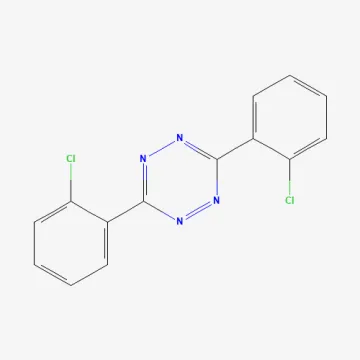
Clofentezine
Description
Mode of action
Clofentezine belongs to the tetrazine chemical class and acts as a highly selective acaricide with contact and stomach action. The substance has a pronounced ovicidal effect, preventing the development of mite eggs.
The mechanism of action is based on disrupting the pest's embryogenesis. The preparation inhibits cell division in spider mite eggs, which leads to the death of the embryo at early stages of development.
The substance has little to no toxic effect on adult mites; however, it causes sterilization of females that have come into contact with the treated plant surface.
The action of clofentezine is characterized by long duration (residual effect lasts up to 40–60 days), which allows for population control throughout the entire season.
The preparation exhibits translaminar properties, penetrating plant tissues, which ensures resistance to rainfall washout and effective performance on the underside of the leaf.
What it targets
Clofentezine is used exclusively against phytophagous mites of the Tetranychidae family (spider mites).
Key pests controlled by this substance include:
- European red mite (Panonychus ulmi)
- Two-spotted spider mite (Tetranychus urticae)
- Fruit tree spider mite (Schizotetranychus pruni)
The scope of application includes pome and stone fruits, vineyards, and certain greenhouse vegetable crops.
The preparation is effective against pests that have developed resistance to other acaricide groups because it has a specific mechanism of action distinct from organophosphates or pyrethroids.
Rates and timing
Application rates depend on the crop type and the severity of infestation, typically ranging from 0.3 to 0.6 kg of active ingredient per hectare.
The optimal time for application is the onset of egg-laying or early larval stages, as this is when the maximum biological efficacy is achieved.
When used on perennial plantations, it is recommended to apply the product before or immediately after flowering to prevent mass mite proliferation during the summer.
A crucial condition is thorough coverage of the leaf surface, as the preparation primarily acts via contact.
Clofentezine can be used in tank mixes with most insecticides and fungicides, provided they do not have an alkaline reaction.
Restrictions
The preparation is safe for beneficial insects, including predatory mites (phytoseiids), bees, and entomophages, making it suitable for integrated pest management (IPM) systems.
There is a risk of resistance development in mites if the same product is used repeatedly during the season, so it is recommended to limit application to once per year.
To prevent pest habituation, clofentezine should be rotated with acaricides from other chemical groups with different modes of action.
Strict adherence to application regulations is necessary to prevent spray drift into water bodies, as the substance is toxic to certain aquatic organisms.
Personal protective equipment for skin and respiratory tract is required when handling the product, as it is classified as a moderately hazardous compound for humans.
Status in the European Union
Not approved in the EU
- CAS number
- 74115-24-5
- Category (EU)
- AC - Acaricide
- Approved from
- 01.01.2009
- Approval until
- 11.11.2023
- ADI
- 0.017 mg/kg bw/day
- ARfD
- Not appl.
- AOEL
- 0.013 mg/kg bw/day
EU status is for reference only and does not replace national registration in your country.