

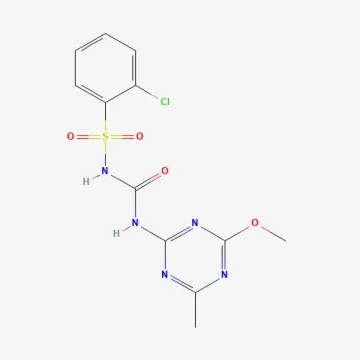
Description
Mode of action
Chlorsulfuron belongs to the sulfonylurea chemical class. It is a highly active, systemic herbicide that is absorbed by weeds primarily through their foliage and root systems.
The mechanism of action involves the inhibition of the acetolactate synthase (ALS) enzyme. This enzyme is crucial for the biosynthesis of branched-chain amino acids in susceptible plants.
By blocking this process, the herbicide halts cell division in the meristematic tissues of the weeds. This leads to a rapid cessation of growth and subsequent plant death.
Visible symptoms, such as chlorosis and necrosis, typically appear within one to two weeks following application, depending on the environmental conditions.
The selectivity of chlorsulfuron is due to the ability of cereal crops to rapidly metabolize the compound into non-toxic substances, ensuring crop safety while effectively eliminating target weeds.
What it targets
Chlorsulfuron is primarily used for weed control in cereal crops, specifically winter and spring wheat, barley, and oats.
It is designed to manage a broad spectrum of annual broad-leaved weeds. It is particularly effective against species that are difficult to control with other herbicide groups.
- Common chickweed
- Shepherd's purse
- Field mustard
- Common lambsquarters
- Common vetch
The product provides superior performance when applied at the early growth stages of the weeds. Application at the seedling stage ensures maximum efficacy.
Additionally, chlorsulfuron is known to suppress certain perennial weed species, contributing to cleaner fields and higher yields for the cereal crops.
Rates and timing
Due to its high biological activity, chlorsulfuron is applied at very low rates, typically ranging from 10 to 20 grams of active ingredient per hectare.
The optimal application timing is during the tillering stage of the cereal crop. It is critical to target the weeds while they are still in their susceptible stage of development.
Many growers use chlorsulfuron in tank mixes with other herbicides to broaden the spectrum of weed control and manage resistant weed populations.
Soil moisture is a vital factor for the effectiveness of the product. Sufficient moisture helps in the uptake and translocation of the herbicide within the plants.
Application must be performed under favorable weather conditions, ensuring that spray drift is avoided, especially when sensitive crops are present in nearby fields.
Restrictions
Chlorsulfuron exhibits a relatively long residual activity in the soil. This poses significant constraints for crop rotation strategies following treatment.
It is strongly advised to consult labels for restrictions on planting sensitive crops, such as sugar beets or oilseed rape, within a specific timeframe after application.
Avoid application under stress conditions, such as frost or extreme temperatures, as the cereal crop's ability to metabolize the herbicide might be temporarily impaired.
Soil pH plays a critical role in the dissipation of the herbicide. Alkaline soils may increase the persistence of the compound, potentially impacting future planting cycles.
Strict adherence to safety guidelines, including the use of protective equipment during mixing and application, is mandatory to prevent health risks and environmental contamination.
Regulatory
Status in the European Union
Not approved in the EU
- CAS number
- 64902-72-3
- Category (EU)
- HB - Herbicide
- Approved from
- 01.01.2010
- Approval until
- 31.12.2019
- ADI
- 0.2 mg/kg bw/day
- ARfD
- Not appl.
- AOEL
- 0.43 mg/kg bw/day
Hazard classification (CLP)
Aquatic Acute 1 - H400Aquatic Chronic 1 - H410
EU legislation
EU status is for reference only and does not replace national registration in your country.
Content graph
Connections · Chlorsulfuron
Most often together:
Marketplace
Products · 6


PHENIZAN, WATER-SOLUBLE CONCENTRATE
ЗАТ Щелково Агрохім , Росія.
Herbicides
0
0
·
52
No offers
—
Details