
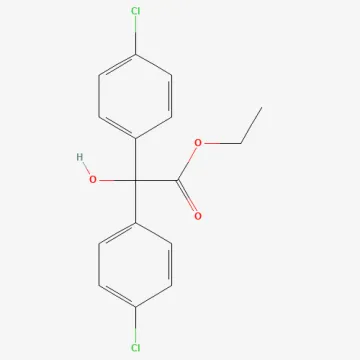
Chlorobenzilate
Description
Mode of action
Chlorobenzilate belongs to the chemical class of organochlorine compounds. It is a specialized contact acaricide that effectively targets mobile stages of phytophagous mite development.
Its mechanism of action involves disrupting the normal functioning of the pest's nervous system. The product causes paralysis of the limbs and respiratory organs of the mite, inevitably leading to its death within a few hours after contact with the treated surface.
The substance exhibits pronounced residual action, remaining on leaf surfaces for an extended period. This allows for the control of subsequent pest generations without the need for frequent applications.
An important feature is the stability of the product under various temperature conditions. It does not degrade under the influence of sunlight, making it a reliable protection tool during hot summer conditions.
Chlorobenzilate does not possess significant systemic properties; therefore, to achieve high biological efficacy, it is essential to ensure thorough wetting of the entire leaf surface, including the undersides of the leaves.
What it targets
The primary purpose of Chlorobenzilate is to control various mite species that cause significant damage to agricultural crops. The product is most effective against spider mites, fruit mites, and brown mites.
It is actively used to protect perennial plantations, vegetable crops, and industrial plants damaged by mites during the active growing season.
- Two-spotted spider mite (Tetranychus urticae)
- European red mite (Panonychus ulmi)
- Brown mite (Bryobia rubrioculus)
- Other phytophagous species of the Tetranychidae family
Applying the product helps prevent premature yellowing and leaf drop caused by pest colonization, which directly impacts the maintenance of the plant's photosynthetic activity.
Using this acaricide helps avoid critical yield reductions and loss of produce quality, especially during dry periods when mite reproduction occurs most intensively.
Rates and timing
Chlorobenzilate application rates are determined by the crop type, level of infestation, and the selected formulation. The product is usually applied as an emulsifiable concentrate.
Application timing is coordinated with the emergence of the first pests or upon reaching the economic threshold of damage. In orchards, treatments are often conducted in the post-flowering period.
The volume of working solution must be sufficient to cover the entire vegetative mass of the plant. Excessive use of the solution can lead to non-target losses of the active ingredient.
Intervals between treatments depend on weather conditions and the rate of pest population development. On average, the protective effect lasts from 10 to 20 days when applying proper technology.
It is not recommended to conduct more than two consecutive treatments with the same product to prevent the development of resistance in mite populations to this class of compounds.
Restrictions
Chlorobenzilate requires strict adherence to safety measures during handling. It is a moderately hazardous compound that requires the use of personal protective equipment for the skin, respiratory tract, and eyes.
Treatments are prohibited during the flowering period of honey plants, as the product may pose a risk to pollinators upon direct contact.
Drift of the product to neighboring fields, water bodies, and pastures should be avoided. Given the substance's persistence in the environment, strict compliance with sanitary zones is necessary during spraying.
There are clearly defined pre-harvest intervals (PHI) that must be strictly observed to prevent the accumulation of chemical residues in agricultural produce.
The product must be stored in specialized warehouse facilities, protected from unauthorized access, children, and animals, following the temperature requirements specified in the manufacturer's instructions.
Status in the European Union
Not approved in the EU
- CAS number
- 510-15-6
- Category (EU)
- AC - Acaricide
- ADI
- 0.02 mg/kg bw/day
EU status is for reference only and does not replace national registration in your country.