
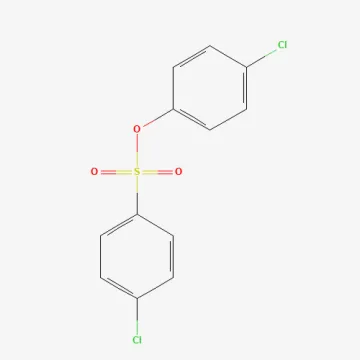
Chlorfenson
Description
Mode of action
Chlorfenson is an organic chemical compound belonging to the diphenyl sulfone class. It is widely utilized as a potent contact acaricide, specifically designed to combat various species of phytophagous mites in agricultural and horticultural settings.
The primary mechanism of action involves a strong ovicidal effect. The compound interferes with the developmental processes of mite eggs, preventing the emergence of larvae and effectively breaking the life cycle of the pest at its earliest stages.
In addition to its ovicidal properties, Chlorfenson acts on the active mobile stages of mites. It disrupts metabolic pathways and molting processes, which leads to the gradual decline and eventual mortality of mite populations on the treated foliage.
A notable feature of this substance is its selectivity. When applied according to recommendations, it exhibits relatively low toxicity toward beneficial predatory mites and insects, making it a viable option for Integrated Pest Management (IPM) strategies.
As a contact-acting chemical, its efficacy is highly dependent on application quality. For optimal results, thorough coverage of all plant surfaces, particularly the undersides of leaves where mites congregate, is essential for adequate control.
What it targets
Chlorfenson is primarily targeted at controlling various species of spider mites, which are major pests in orchards, vineyards, and greenhouses, capable of causing significant economic damage.
It is particularly effective against the European red mite and the brown mite, both of which feed on tree sap and cause chlorosis, leading to reduced photosynthetic efficiency and diminished fruit quality.
The compound is used to target both eggs and immature mites. By suppressing these stages in the early season, growers can significantly reduce the potential for explosive outbreaks during warmer months.
Effective management with this acaricide helps prevent the premature leaf drop and stunted growth often associated with heavy mite infestations in perennial fruit crops.
- Spider mites (Tetranychidae)
- European red mite
- Brown fruit mite
- Gall mites
Rates and timing
The timing of applications is determined by field monitoring and the identification of mite development stages. Preventive treatments are most effective when applied early in the season to target the overwintering eggs.
Application rates vary based on the canopy density and the type of equipment used. A sufficient volume of water, typically ranging from 800 to 1500 liters per hectare, is required to ensure full coverage of the plant's surface area.
If mite pressure remains high, follow-up applications may be necessary with an interval of 14 to 21 days. This approach helps to manage subsequent generations and mitigates the risk of rapid population recovery.
Environmental conditions during application should be carefully considered. It is best to apply the product during cooler parts of the day to minimize evaporation and ensure proper deposition on the leaf surfaces.
Precise calibration of sprayers is required to achieve the desired droplet size, ensuring that the acaricide reaches all parts of the plant canopy, including the internal branches where pest density can be highest.
Restrictions
Chlorfenson should be handled with caution as it can be toxic to aquatic organisms. Application near water bodies must be avoided to prevent environmental contamination and protect aquatic ecosystems.
Growers must strictly adhere to the pre-harvest interval (PHI) specified on the product label. This ensures that any residual traces of the chemical have degraded, making the produce safe for human consumption.
Operators must wear appropriate Personal Protective Equipment (PPE), including gloves, goggles, and respirators, to prevent dermal contact and inhalation during the mixing and spraying processes.
Storage should be conducted in original containers in a cool, dry, and well-ventilated area. The site must be secure, protecting the chemical from unauthorized access, children, and pets, and kept away from extreme heat sources.
Avoid tank-mixing with strongly alkaline substances unless compatibility tests have been performed, as these conditions can cause the degradation of the active ingredient and result in a significant loss of biological efficacy.
Status in the European Union
Not approved in the EU
- CAS number
- 80-33-1
- Category (EU)
- AC - Acaricide
- ADI
- 0.01 mg/kg bw/day
EU status is for reference only and does not replace national registration in your country.