
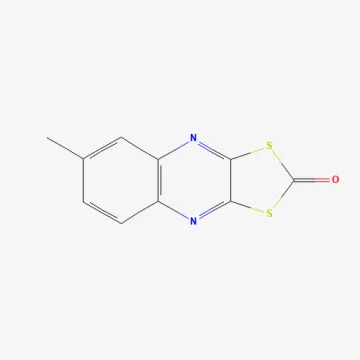
Chinomethionat
Description
Mode of action
Chinomethionat belongs to the quinoxaline derivative chemical class. This compound is characterized by a unique combination of properties that allow it to affect various groups of pathogens and pests simultaneously.
The mechanism of action involves the inhibition of cellular respiration processes in harmful organisms. It blocks energy metabolism, which leads to the rapid death of mites and suppresses the development of fungal spores.
The product has a pronounced contact action, which requires thorough and uniform coverage of plant surfaces with the working solution during spraying.
Within the plant, the substance does not possess systemic properties; it remains on the surface of the tissues, forming a protective barrier against re-infestation or colonization by pests.
An important feature is its translaminar activity, which allows it to partially penetrate leaf tissues, enhancing protection efficiency when treating actively growing crops.
What it targets
Chinomethionat is a highly effective acaricide that destroys spider mites at all stages of their development, including eggs, larvae, and adults.
In addition to its acaricidal properties, the substance exhibits significant fungicidal activity, particularly effective against powdery mildew pathogens on various agricultural crops.
It is applied to a wide range of fruit and berry crops, including apples, pears, vineyards, and greenhouse vegetable crops.
The product's action allows for the control of herbivorous mite populations, preventing premature yellowing and leaf drop caused by their feeding activity.
It is effective against powdery mildew fungal diseases that affect leaves, inflorescences, and young shoots of crops during their active growth period.
Rates and timing
The timing of applications is determined by the pest economic threshold or the appearance of initial disease symptoms on the plant leaves.
Recommended dosage rates vary depending on the level of crop infestation and the type of equipment used for spraying operations.
To achieve maximum results, treatments must be performed in dry, calm weather conditions, ensuring high-quality wetting of the leaf surface on both sides.
The number of treatments per season is strictly regulated to prevent the accumulation of chemical residues in produce and the development of pest resistance.
If combined application with other pesticides is necessary, a preliminary chemical compatibility test for the tank mixture components should be performed.
Restrictions
The use of Chinomethionat requires adherence to strict safety measures, including the use of personal protective equipment for skin, respiratory, and eye protection.
Treatments during the flowering period of crops are prohibited in the presence of bees, as the substance may exhibit moderate toxicity to beneficial insects.
Established pre-harvest intervals must be strictly followed to ensure food safety of the harvested products.
Frequent use of the same active substance over a long period is not recommended to avoid the emergence of resistant mite populations.
Storage of the product must take place in specialized dry facilities, preventing access by unauthorized persons and direct contact with food products.
Status in the European Union
Not approved in the EU
- Category (EU)
- AC - Acaricide
- ADI
- 0.006 mg/kg bw/day
EU status is for reference only and does not replace national registration in your country.