

Nomin 400
F. Kumiay Kemi Kal Industry Co., Ltd., Japan
Herbicides
0
0
·
956
1 offer
268.48 €per 1 l
Buy
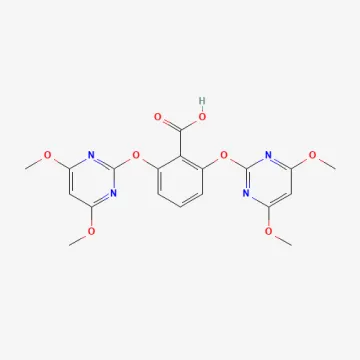
Bispyribac-sodium belongs to the pyrimidinyl thiobenzoate chemical class. It is a highly effective systemic active ingredient that penetrates the plant primarily through the leaf tissue, while also exhibiting some soil activity.
The primary mechanism of action involves the inhibition of the acetolactate synthase (ALS) enzyme in susceptible plants. Blocking this enzyme stops the biosynthesis of essential amino acids, including valine, leucine, and isoleucine.
Following the application of the product, the growth of weeds ceases almost immediately. Visible signs of plant death, such as chlorosis and necrosis of the growth points, appear within a few days of treatment.
Complete mortality of weeds when using products based on this substance occurs within 2–3 weeks. The duration of the effect depends on weather conditions and the growth stage of the target weeds.
Due to its systemic nature, the substance is rapidly translocated through the vascular system of the weed, ensuring the destruction of both the above-ground parts and the root systems of many grass and broadleaf species.
The primary use of bispyribac-sodium is for selective weed control in rice cultivation. It effectively suppresses a wide range of grasses, sedges, and certain broadleaf weeds commonly found in rice paddies.
Barnyard grass (Echinochloa species) shows the highest sensitivity to this active ingredient, making it a critical tool for managing this major competitor of rice for nutrients and moisture in the field.
The product also successfully controls various sedge species and other weeds frequently encountered in paddy fields. The use of this component significantly reduces weed pressure in crop stands.
Cultivated rice exhibits high selective tolerance to bispyribac-sodium due to its ability to rapidly metabolize the substance within its tissues. This makes it safe for application in rice fields at specific growth stages.
Application rates depend on the weed spectrum and their growth stage. Generally, treatments are performed at the 2–4 leaf stage of grassy weeds, when they are most vulnerable to ALS-inhibiting activity.
Products based on bispyribac-sodium are often applied to moist soil or directly into the water layer in the paddy, which requires draining the field before spraying and returning the water shortly thereafter.
It is recommended to use a sufficient volume of spray solution to ensure uniform coverage of all weed parts. Adhering to optimal application timing is crucial for achieving maximum herbicidal efficacy.
If tank mixtures are necessary, compatibility with other pesticides must be checked. Mixing with certain organophosphate insecticides is generally discouraged to avoid phytotoxicity to the crop.
The number of applications per season is typically limited to a single treatment. It is essential to strictly follow the regulations provided by the specific product manufacturer to minimize the risk of residual effects.
Bispyribac-sodium should not be applied to rice crops experiencing stress. Stress factors include extreme temperature fluctuations, frost, or prolonged drought conditions.
It is necessary to avoid spray drift onto adjacent fields containing sensitive crops, such as soybeans or vegetables. The substance maintains high biological activity even at low dosage rates.
When using the product in a crop rotation system, consideration should be given to the replanting intervals of subsequent crops. While bispyribac-sodium has moderate persistence, degradation processes can slow down in soil with specific pH levels.
Personal protective equipment (PPE) is mandatory when handling the substance. Users must protect their skin and respiratory tract to prevent exposure and accidental ingestion.
Storage must be in original containers in a cool, dry, and dark area, inaccessible to children and animals, and away from food or animal feed supplies.
Not approved in the EU
EU status is for reference only and does not replace national registration in your country.


