

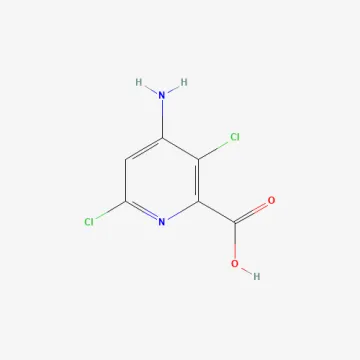
Description
Mode of action
Aminopyralid is a systemic herbicide belonging to the pyridine carboxylic acid chemical class. It is absorbed by both foliage and roots and is readily translocated throughout the plant via the phloem and xylem.
The mode of action involves mimicking plant growth hormones known as auxins. By interfering with auxin-regulated pathways, the herbicide causes rapid and uncontrolled cell division and expansion in susceptible weeds.
This physiological disruption leads to twisted stems, curled leaves, and inhibited growth, ultimately resulting in the death of the plant due to metabolic exhaustion and tissue breakdown.
Unlike many other herbicides, aminopyralid provides deep systemic control, reaching the underground structures of perennial weeds, which effectively prevents regeneration.
It is valued for its high level of selectivity, allowing for effective weed management in target crops without causing significant phytotoxicity when applied according to label directions.
What it targets
Aminopyralid is specifically designed to control a broad spectrum of broad-leaved weeds, particularly those that are resistant to other herbicide groups.
Key target species include various thistles, milkweeds, ragweed, bindweed, and camomile, making it highly effective against difficult perennial species.
It is primarily used in small grain cereals, such as wheat, barley, and oats, as well as in permanent grasslands and pastures where it enhances the quality of forage.
Because of its specific chemistry, it is often used as a tool in integrated weed management programs to tackle species that show signs of resistance.
- Cirsium arvense (Canada thistle)
- Ambrosia artemisiifolia (Common ragweed)
- Convolvulus arvensis (Field bindweed)
- Matricaria inodora (Scentless mayweed)
- Carduus nutans (Musk thistle)
Rates and timing
The application rates of aminopyralid are typically in the range of 60 to 120 grams of active ingredient per hectare, depending on the weed spectrum and density.
Application timing is crucial; the most effective results are achieved when weeds are actively growing, ideally at the rosette or early stem-extension stage.
For cereal crops, the window of application usually ranges from the tillering stage to the early jointing stage to ensure crop safety and maximum herbicide efficacy.
Optimal environmental conditions include temperatures between 8°C and 25°C, ensuring that the weeds are not undergoing drought stress or other unfavorable conditions.
Strict adherence to the application window is necessary to maximize weed control and avoid any potential negative impact on the crop development.
Restrictions
One of the most critical limitations of aminopyralid is its soil persistence, which necessitates a carefully planned crop rotation strategy to avoid carryover damage.
Sensitive crops such as legumes, potatoes, sugar beets, and sunflowers must not be planted in treated fields for at least one full growing season following application.
Crop residues from treated areas must not be used for composting or mulching because the herbicide remains active and can harm susceptible plants later on.
Spray drift must be strictly managed to prevent the herbicide from reaching neighboring fields containing sensitive broad-leaved crops or gardens.
Operators must wear appropriate personal protective equipment and follow all safety protocols to minimize exposure during mixing, loading, and application.
Regulatory
Status in the European Union
Approved in the EU
- CAS number
- 150114-71-9
- Approved from
- 01.01.2015
- Approval until
- 31.05.2027
- ADI
- 0.26 mg/kg bw/day
- ARfD
- 0.26 mg/kg bw
- AOEL
- 0.26 mg/kg bw/day
EU legislation
EU status is for reference only and does not replace national registration in your country.
Content graph
Connections · Aminopyralid
Most often together:
Marketplace
Products · 15


Galera Super
Доу АгроСайенсіс С.А.С., Друзенхайм, Франція
Herbicides
0
0
·
42
1 offer
67.12 €per 1 l
Buy


GALERA SUPER, RK
Доу АгроСайенсіс С.А.С., Друзенхайм, Франція
Herbicides
0
0
·
37
6 offers
41.25 €per 1 l
Buy

Prima Forte, SE
Доу АгроСайенсіс С.А.С., Друзенхайм, Франція
Herbicides
0
0
·
33
18 offers
8.87 €per 1 l
Buy


Prima Forte
Доу АгроСайенсіс С.А.С., Друзенхайм, Франція
Herbicides
0
0
·
24
4 offers
2.7 €per 1 l
Buy
