
Cargo lashing straps: reliable fixation for transport and storage
Cargo lashing straps are an essential tool in modern logistics and manufacturing. They combine strength and ease of use.


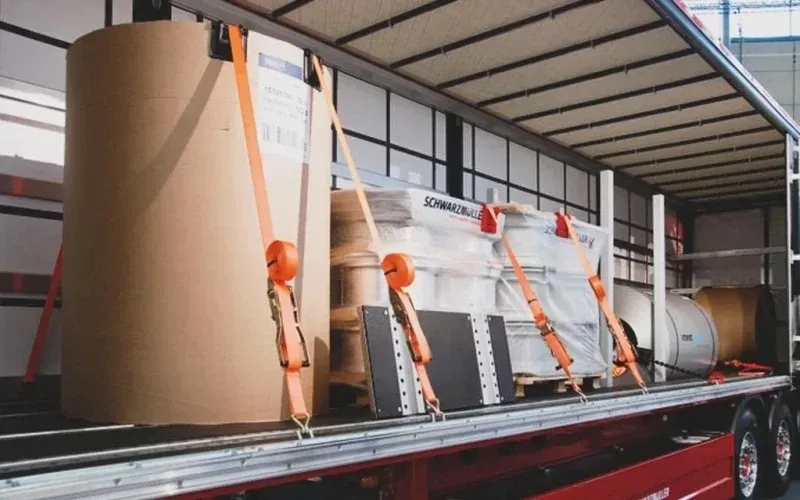
Cargo lashing straps are specialized rigging devices designed to keep transported items stationary during transit, loading, and storage. They consist of a combination of a durable textile strap and a tensioning device, which together ensure the load is pressed tightly against the platform, truck bed, or pallet. Such products are widely used in logistics, construction, agriculture, manufacturing, and daily life because they allow for the quick, safe, and damage-free fixation of cargo.
History and standards
Initially, hemp ropes, steel cables, and chains were used for securing cargo. However, with the development of automotive transport, it became evident that metal solutions damaged the surfaces of items, while ropes wore out quickly. In the mid-20th century, the first synthetic fiber textile straps appeared, along with ratchet mechanisms for tensioning.
Today, the production of straps is strictly regulated by the European standard EN 12195-2, which defines requirements for strength, labeling, and product safety. In Ukraine, the interstate GOST 33719-2015, harmonized with European norms, is in effect. Compliance with these standards is a mandatory condition for using straps on public roads.
Design features
Every cargo strap consists of several key elements:
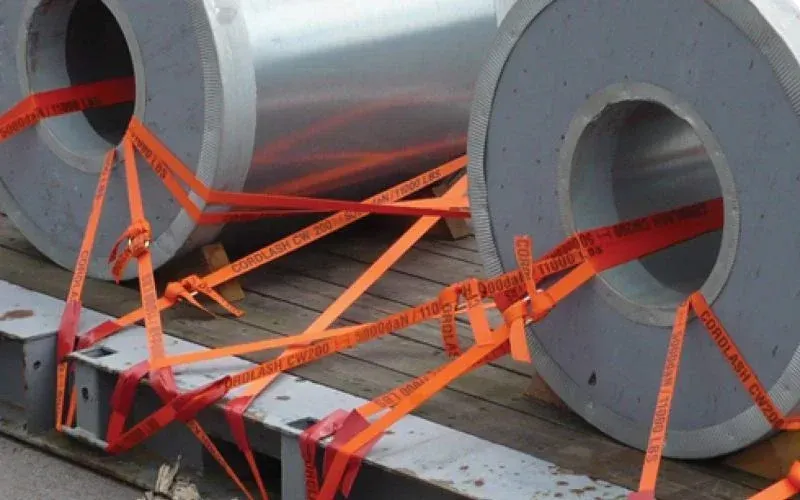
Strap. The base of the product, made primarily of polyester (PES). This material is resistant to stretching, ultraviolet light, moisture, and temperature fluctuations. Polypropylene (PP) and nylon are used less frequently, each having its own characteristics.
Tensioning mechanism (ratchet). Allows for smooth increase in tension and fixes the strap in a set position. Consists of a ratchet wheel, lever, and spring-loaded lock.
Hardware. Hooks, rings, D-rings, and carabiners made of galvanized or stainless steel. These are used to attach the strap to the fixation points on the transport vehicle.
Protective elements. Some models include corner protectors, pads, and covers that prevent the strap from rubbing against sharp edges of the object being transported.

Areas of application
Cargo straps find use in a wide variety of areas:
Automotive transport. Securing machinery, building materials, and furniture in truck beds and on trailers.
Railway transport. Securing containers and large items in rail cars.
Maritime and river transport. Holding cargo in holds and on ship decks.
Warehousing. Forming pallets, tying homogeneous items into bundles.
Construction. Holding pipes, timber, and metal structures during transport.
Household use. Transporting luggage on a car roof, securing motorcycles and ATVs on trailers.
Safety rules for use
For the lashing to be reliable and the product to last a long time, it is important to follow several rules:
Before each use, inspect the strap for cuts, abrasions, and tears. A damaged product must not be used.
Do not exceed the permissible load indicated on the label.
When in contact with sharp edges, be sure to use protective corner pieces or pads.
Tensioning should be smooth, without jerks – this will prevent damage to the mechanism and the strap.
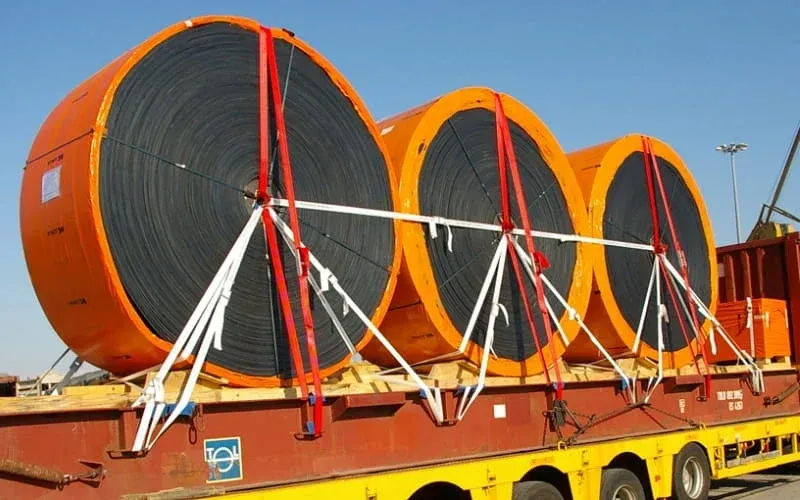
Distribute the load evenly: for large objects, use several straps installed according to the scheme recommended by the standard.
Store the products in a dry place, away from direct sunlight and various aggressive chemical substances.
Care and storage
Proper care extends the service life of these products significantly:
After use, clean the strap of dirt and sand with a soft brush.
In case of heavy soiling, washing in warm water without aggressive detergents is acceptable.
Before storage, ensure the strap is completely dry.
Store in a dry, ventilated room at temperatures from -20 to +40 °C.
Regularly check the condition of the mechanisms and lubricate moving parts as necessary.
In conclusion
Cargo lashing straps are an essential tool in modern logistics and manufacturing. They combine strength, ease of use, and gentle handling of transported items. Properly selected and correctly operated, these products ensure safety on the road, protect property from damage, and save time during loading and unloading. The main thing is to choose products that meet quality standards, follow operational rules, and replace worn-out units in a timely manner.
Editorial team agronom.info
Materials are prepared by the portal's agronomists and editors. We use only trusted sources: Ukrainian agricultural universities, variety registries, open scientific publications.
Related articles

Financial instruments for updating the agricultural technology fleet: choosing an optimal strategy

Maintenance and Repair of Hydraulic Systems for Agricultural Machinery: Extending Component Lifespan

Pre-sowing soil tillage: main stages and selection of machinery
Not yet comments. Be the first!
Comments · 0