
Pre-sowing soil tillage: main stages and selection of machinery
The quality of seedbed preparation affects the conditions in which seeds germinate. Before sowing, it is necessary to form a sufficiently level surface and prepare a soil layer that meets the requirements of a specific crop and the seeder being…
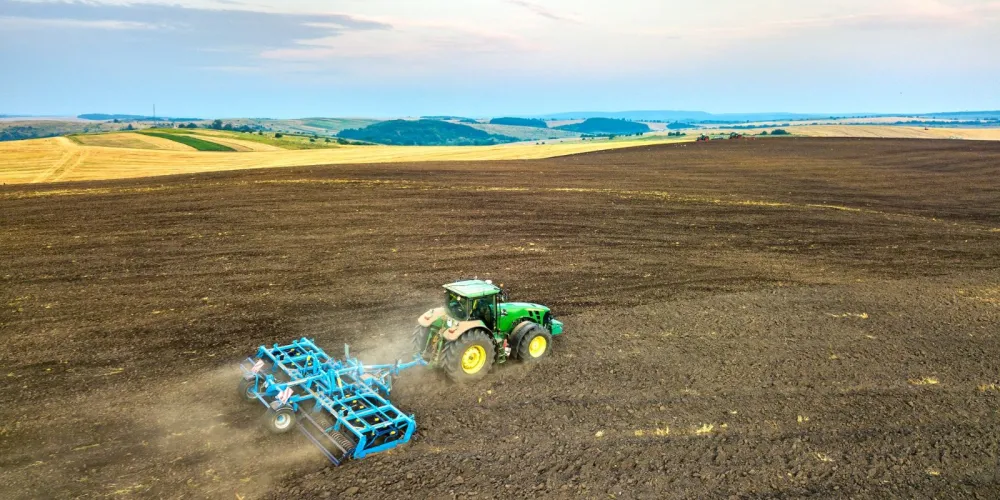
The quality of seedbed preparation affects the conditions in which seeds germinate. Before sowing, it is necessary to form a sufficiently level surface and prepare a soil layer that meets the requirements of a specific crop and the seeder being used.
Pre-sowing tillage is used to solve these tasks. Its goal is not maximum soil loosening, but creating suitable conditions for sowing operations.
What tasks does pre-sowing tillage solve
The state of a field before sowing depends on primary tillage, soil overwintering, rainfall, mechanical composition, and other factors. Therefore, the volume of necessary work is determined immediately before the sowing season.
Pre-sowing tillage may include:
loosening the surface layer;
field leveling;
breaking up soil crust;
destroying sprouted weeds;
preparing the seedbed.
At the same time, an excessive number of passes is undesirable. Each additional operation requires fuel and time, and can also contribute to moisture loss.
Which cultivator to use
Specialized pre-sowing implements are used for field preparation. Their task is to work evenly at a set depth and form a surface suitable for subsequent sowing.
When choosing a cultivator for pre-sowing soil tillage, it is necessary to compare the characteristics of the machine with the requirements of the crops grown, soil types, features of the seeders, and the power of the available tractors.
Not only the nominal working depth is important. The machine must ensure its uniformity across the working width and operate stably when field conditions change.
Working depth
One of the tasks of pre-sowing preparation is to form a seedbed without excessively disturbing the soil structure. Therefore, the tillage depth is chosen taking into account the subsequent seed placement depth and the state of the field.
Excessively deep tillage can lead to additional energy costs and drying out of the loosened layer. Insufficient tillage, in turn, does not always allow for quality surface leveling and the elimination of compaction or crust.
Settings should be checked directly in the field, as the actual depth may differ from the set depth depending on moisture, soil density, and travel speed.
Working width and productivity
During the sowing season, time is especially valuable. Field preparation must be coordinated with the work of sowing units so that there are no long delays between operations.
Therefore, wide-span cultivators are in high demand for large areas. But increasing the width only makes sense if there is a tractor of appropriate power.
It is also important to consider the field relief. On uneven areas, the design of the implement must ensure surface following; otherwise, the tillage depth of different sections may vary.
Is rolling and leveling necessary
A pre-sowing cultivator can perform several operations in one pass. In addition to loosening working tools, the design may include elements for leveling and rolling.
Such a combination allows for preparing the surface for sowing without an additional pass of a separate implement. However, the specific configuration must meet the farm's conditions: there is no universal set of working tools for all soils and crops.
How to evaluate the quality of field preparation
After the equipment passes, one should evaluate not only the appearance of the surface. It is important to check the loosening depth, the presence of large clods, the uniformity of tillage, and the state of the layer where the seeds will be placed.
If a sowing complex is working immediately behind the cultivator, it is also necessary to evaluate the quality of the seeder's work against the prepared background.
Thus, the choice of pre-sowing machinery should be considered as part of the overall sowing technology. The cultivator, tractor, and seeder must work as a single system in terms of productivity and requirements for soil condition. This allows for sowing within the necessary timeframes and avoiding operations that do not provide additional agrotechnical results for the farm.
Editorial team agronom.info
Materials are prepared by the portal's agronomists and editors. We use only trusted sources: Ukrainian agricultural universities, variety registries, open scientific publications.
Related articles
Not yet comments. Be the first!
Comments