
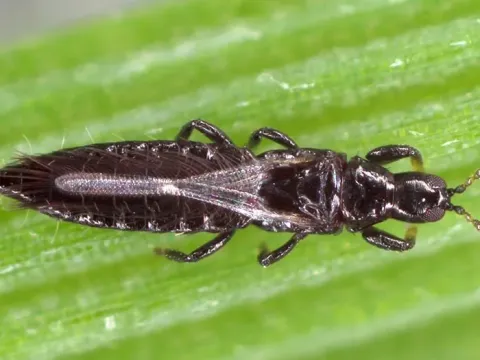
Organothrips
Organothrips
Organothrips is a genus of insects belonging to the order Thysanoptera and the family Thripidae. These microscopic pests are known for their slender bodies and distinctive fringed wings, which are characteristic of the entire suborder.
What the section contains
Organothrips
Typically found in moist environments, such as greenhouses or hydroponic setups, they are highly adaptable. Taxonomic identification relies on examining specific setae patterns and the morphology of the antennae under laboratory conditions.
The life cycle encompasses several distinct stages: egg, two larval instars, prepupa, pupa, and adult. Each stage is adapted to thrive in micro-habitats provided by host plants, often within the humid pockets of foliage.
Due to their small size and cryptic habits, these pests are often overlooked during the initial stages of infestation. Their mobility allows them to spread rapidly throughout a greenhouse facility if left unmonitored.
Understanding their developmental biology is crucial for effective management, as different life stages show varying levels of susceptibility to both biological control agents and chemical insecticides.
Organothrips primarily targets ornamental, aquatic, and hydrophonic plants. Their feeding strategy involves puncturing the epidermal cells of the leaves and extracting the cell sap, which causes immediate tissue stress.
The damage to the photosynthetic apparatus is significant; as chlorophyll-bearing cells are destroyed, the plant's ability to produce energy is severely compromised, leading to stunted growth and reduced vigor.
Visible damage often manifests as silvery or necrotic patches on the leaves. These areas are prone to secondary infections by bacteria or fungi, which can exacerbate the health decline of the host plant.
Heavy infestations result in leaf curling, yellowing, and premature abscission. For decorative plants, this represents a complete loss of market value, making control efforts a financial necessity.
In addition to direct physiological damage, they can act as vectors for various plant pathogens, making them a significant threat to high-density cultivation environments where virus transmission is a major concern.
Early symptoms include tiny white or silver streaks or spots on the leaf surface. These are caused by air entering the cells after the insect has removed the contents, creating a characteristic silvery appearance.
The presence of small, dark fecal spots on the underside of leaves is a hallmark indicator of an active Organothrips colony, helping to differentiate them from other sap-sucking pests like mites.
Deformation of young growth is a common sign, where leaves become twisted or misshapen due to the insect's intensive feeding on developing tissues at the growing points of the plant.
Using sticky yellow or blue traps is the most effective way to detect the presence of adults early on. A sudden increase in trap counts indicates an active population that requires immediate management.
During physical inspection, look for small, elongated insects that move quickly across the leaf surface when disturbed. Larval stages are typically more stationary and often cluster in protected areas like vein junctions.
Sanitation is the first line of defense; removing debris and controlling weeds in and around the growing area significantly reduces the population pressure from external reservoirs.
Biological control agents, such as predatory mites (Amblyseius spp.) or minute pirate bugs (Orius spp.), are highly effective at suppressing Organothrips populations in indoor settings without chemical residues.
When chemical intervention is necessary, systemic insecticides applied as sprays or through irrigation systems are preferred. Rotating different modes of action is vital to prevent the development of insecticide resistance.
Environmental manipulation, such as adjusting humidity and temperature, can sometimes disrupt the reproductive cycle of the pest, though it must be carefully balanced with the needs of the cultivated crop.
A successful management program relies on integrated pest management (IPM) practices, combining continuous monitoring, early detection, and the judicious use of compatible control methods to maintain a healthy crop.