
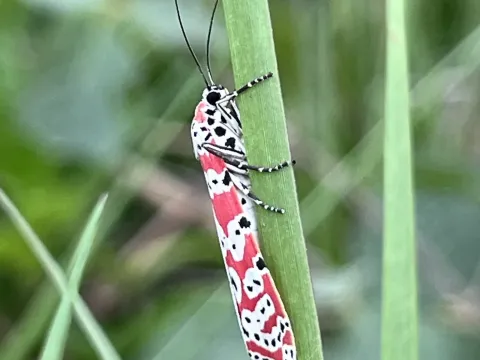
Bella moth
Utetheisa bella
The Bella moth (Utetheisa bella) is a distinct member of the Erebidae family. The adult moths are easily recognizable by their vibrant forewings, which feature a white, cream, or yellow background marked with a series of black dots and distinct red-orange bands.
What the section contains
Bella moth
The larvae, or caterpillars, are equally distinctive, possessing a dark body covered with sparse hairs and marked by striking orange and white transverse stripes. This pattern is aposematic, signaling to potential predators that they are distasteful due to sequestered alkaloids.
Adult moths have a wingspan ranging from 35 to 45 mm. While there is slight variation in size between sexes, their overall appearance remains consistent, facilitating field identification for farmers and scouting professionals.
The life cycle undergoes complete metamorphosis, consisting of the egg, larva, pupa, and adult stages. In favorable climates, the species can complete multiple generations in a single year, leading to potential population explosions.
These insects are primarily found in fields where their host plants are present. They are particularly attracted to areas with abundant nectar sources, which the adults utilize to sustain their activity during the reproductive period.
The Bella moth is primarily a specialist feeder on plants within the Fabaceae (legume) family. Their preferred hosts include Crotalaria, soybeans, alfalfa, and various wild legumes that grow near or within cultivated agricultural lands.
Larval feeding is the primary cause of economic damage. Caterpillars consume leaves, buds, and seed pods, often leading to significant defoliation of the host plant, which drastically reduces the photosynthetic capacity of the crop.
When infestation occurs during the reproductive stage, the larvae tunnel into the seed pods, consuming the developing seeds. This results in direct yield loss and compromises the marketability and germinability of the harvest.
High population densities can lead to the total destruction of foliage on young seedlings. Stressed plants are also more susceptible to opportunistic pathogens, which can exacerbate the damage caused by the physical feeding of the caterpillars.
Economic impact is most severe when infestations align with critical growth stages, such as the early seedling phase or the pod-filling stage, where the plant's ability to compensate for tissue loss is limited.
The earliest signs of infestation are small, irregular holes in the leaf surface created by early-instar larvae. As the caterpillars grow, these holes enlarge, eventually leaving only the veins of the leaves intact (skeletonization).
Egg masses can be found on the undersides of the leaves. These eggs are small, rounded, and typically pale yellow. Finding these masses is a clear indicator that a new generation of larvae will soon be active on the crop.
Frass, the waste product of the larvae, appears as small dark pellets on the leaves or beneath the plants. Observing an accumulation of frass is a reliable sign of active feeding and is often easier to detect than the larvae themselves.
The presence of webbed or folded leaves, which the caterpillars use as protective shelters, is another diagnostic sign. These shelters are often seen near the terminal growth of the plant where larvae find tender tissues.
Adult moths may be sighted resting on foliage during the day, especially in areas with dense vegetation. They are relatively slow flyers when disturbed, making them easier to spot than many other species of nocturnal moths.
Cultural control strategies focus on sanitation and habitat management. Removing wild legume weeds from field margins reduces the alternate host availability, which helps keep the local pest population under control.
Biological control options involve encouraging natural enemies, such as parasitic wasps and predatory beetles. Applying microbial pesticides based on Bacillus thuringiensis is effective against young larvae without disrupting beneficial insect populations.
Chemical control should be implemented only after thorough scouting indicates that the pest population has reached the economic threshold. Insecticides should be applied with consideration for selectivity to preserve natural predators.
Integrated Pest Management (IPM) is essential for long-term control. This includes crop rotation, avoiding continuous planting of legumes, and monitoring moth flight activity using pheromone or light traps to time insecticide applications accurately.
- Implement regular field scouting on a weekly basis.
- Destroy crop residues immediately after harvest to disrupt pupal development.
- Use resistant cultivars if available for specific regions.
- Avoid broad-spectrum pesticide use to maintain natural biological balance.