
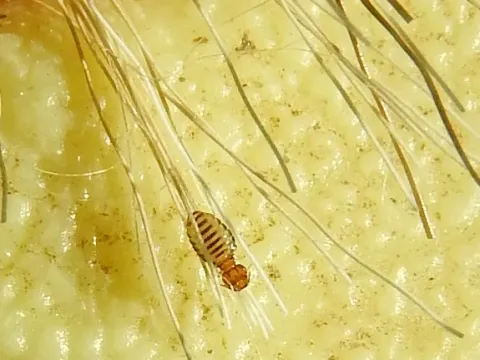
Biting louse
Damalinia
Biting lice (Damalinia) are wingless ectoparasites that belong to the order Mallophaga and the family Trichodectidae. Unlike sucking lice, these insects possess chewing mouthparts specifically evolved to feed on skin debris, epidermal scales, and secretions from the host's sebaceous glands.
What the section contains
Biting louse
The adult insect is small, typically 1.5–2 mm in length, with a flattened, yellowish-brown body and a broad head that is wider than the thorax. They do not have wings and their legs are equipped with tarsal claws adapted for clinging firmly to the hair shafts of their hosts.
The life cycle consists of three developmental stages: egg (nit), nymph, and adult. Females deposit eggs at the base of the hair, anchoring them with a strong adhesive secretion. The complete cycle from egg to adult takes approximately 3 to 4 weeks, depending on environmental factors.
These parasites are host-specific and obligate, meaning they cannot survive for long periods away from their hosts. Under typical room conditions, they usually die within a few days without a mammal host, which makes direct physical contact the primary route for transmission.
Biting lice populations can grow rapidly, especially in high-density livestock environments. A single female can produce dozens of eggs, leading to a significant increase in the parasite burden within a herd if left untreated during the winter months.
Biting lice mainly affect livestock, including cattle, sheep, goats, and horses. Each species of Damalinia is typically host-specific, meaning they do not usually cross over between different types of animals.
The primary damage is caused by the constant gnawing and irritation of the skin, which leads to intense itching. This forces the animals to rub against walls, feeders, and other objects to relieve the discomfort, resulting in physical injury to the skin.
Infestation typically manifests as patchiness, thinning hair, or extensive alopecia (hair loss). The constant stress and irritation can lead to secondary skin infections (dermatitis) and a decrease in overall livestock performance, including reduced weight gain.
Economic losses are significant, primarily due to the depreciation of hide and wool quality. Damaged fibers and scars on the skin lower the market value of the animal products, and weakened immune systems make the herd more susceptible to other diseases.
Young animals are particularly vulnerable to heavy infestations, which can lead to severe stunting and general lethargy. The combination of discomfort and nutritional drain negatively impacts the overall efficiency of the livestock enterprise.
Biting lice are most prevalent during the cold winter months when livestock are kept in barns and stables. The dense winter coat provides the necessary microenvironment for the parasites to thrive and reproduce.
As the weather warms and animals are turned out to pasture, the intensity of the infestation usually decreases. Increased sunlight, higher temperatures, and the natural shedding of hair contribute to a natural reduction in the lice population.
The most noticeable sign of a biting lice infestation is intense restlessness and the animal's constant attempt to scratch itself against objects. This results in rough, scuffed patches of skin throughout the barn.
- Patches of hair loss or broken, matted hair.
- Visible dandruff or crusty, scaly skin on the shoulders, neck, back, and tail head.
- Detection of small, yellowish-brown moving insects deep within the hair near the skin.
- Visible skin irritation, redness, or secondary sores from persistent rubbing.
- Unexplained weight loss or poor body condition scores among members of the herd.
Effective control involves the use of approved insecticides available as pour-on solutions, sprays, dips, or dusts. Topical treatments that contain synthetic pyrethroids or macrocyclic lactones are commonly recommended for management.
A second application is vital, usually 10–14 days after the first one. Because most insecticides do not kill the eggs (nits), the second treatment is necessary to kill the newly hatched nymphs before they reach maturity and reproduce.
Environmental sanitation is a critical component of control. Stables, fences, and grooming tools must be thoroughly cleaned and disinfected to eliminate any lice or nits that may have fallen off the host.
Prevention focuses on the regular inspection of animals, especially before moving them into housing for the winter. Implementing a quarantine period for new animals entering the herd helps prevent the introduction of these pests.
Good nutrition and appropriate animal welfare practices enhance the host's natural immunity, making them less susceptible to heavy parasitic loads. Maintaining a clean and dry living environment is key to discouraging lice population growth.