
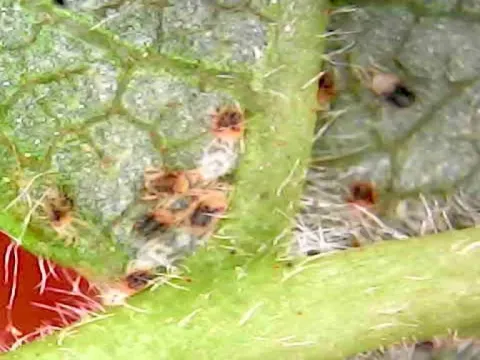
Horridus spider mite
Tetranychus horridus
Tetranychus horridus is a member of the family Tetranychidae, within the order Trombidiformes. These mites are microscopic in size, typically making them difficult to detect with the naked eye, and often requiring magnification for accurate identification in field conditions.
What the section contains
Horridus spider mite
Adult mites typically exhibit an oval shape, with coloration ranging from pale green to yellowish or reddish, depending on their diet and developmental stage. Females are generally larger than males and possess specialized bristles that aid in adhesion to leaf surfaces.
The life cycle encompasses several stages: egg, larva, and two nymphal stages (protonymph and deutonymph). This rapid developmental process allows the species to propagate quickly, especially under favorable warm and dry environmental conditions.
Reproduction is efficient, with females depositing eggs on the underside of leaves, often securing them with fine silk webs. These webs serve as both structural support for the colony and as a protective barrier against environmental fluctuations.
Scientific identification often relies on the microscopic examination of male aedeagus morphology, as many Tetranychus species share very similar external appearances, requiring expert analysis for definitive diagnosis.
Tetranychus horridus is a polyphagous pest, meaning it feeds on a wide range of host plants. By piercing the epidermis of leaves and consuming cell sap, these mites cause direct cellular damage, which leads to the disruption of chlorophyll and loss of photosynthetic efficiency.
Damaged plants exhibit signs of stress, including chlorosis and stunted growth. If left unmanaged, heavy infestations can lead to premature leaf drop and a significant decline in the overall vigor of the plant, making it more susceptible to secondary diseases.
In commercial agriculture, the presence of this pest can result in significant economic losses by reducing both yield and the market quality of ornamental plants. The damage is cumulative and becomes exponential if the environment remains dry and hot.
Plants struggling with mite pressure often show reduced nutrient uptake, leading to weak stems and poorly developed foliage. In severe cases, the entire plant may become desiccated and fail to recover even after the pest population is reduced.
- Loss of leaf chlorophyll and yellowing (chlorosis).
- Stunted plant development and reduced growth rates.
- Premature defoliation of the host plant.
- Increased vulnerability to secondary fungal or bacterial pathogens.
- Reduction in overall crop yield and aesthetic value.
The activity of Tetranychus horridus is closely tied to the growing season, typically starting in the spring once temperatures are sufficiently high. As spring progresses, overwintering females emerge from their shelters to initiate new colonies on emerging foliage.
Peak population density usually occurs during the hot, dry summer months. High temperatures shorten the development time of each generation, allowing for multiple overlapping generations that can lead to explosive population growth within a short period.
As daylight hours decrease and temperatures drop in the autumn, female mites transition into a state of diapause. They seek out protected areas, such as bark crevices, plant debris, or soil, to survive the winter and restart the cycle the following year.
Early-season monitoring is critical for management, as localized populations can quickly expand if not identified early. Frequent inspections during the peak summer months are essential for preventing widespread outbreaks on sensitive crops.
In controlled environments, such as greenhouses or indoor nurseries, the activity cycle may continue uninterrupted year-round if the microclimate remains conducive to mite development and host plants are present.
The earliest signs of infestation are small, light-colored speckles on the leaf surface, which correspond to individual cell-piercing wounds. Over time, these spots expand and merge, resulting in large, faded, and discolored patches on the leaves.
The presence of fine, silk webbing on the underside of leaves or between stems is a classic indicator of a spider mite infestation. This webbing is often clearly visible when morning dew is present or if the foliage is lightly misted.
As the infestation progresses, leaves may become brittle, dry, and lose their vibrant color, eventually curling at the edges. A dusty or grainy appearance on the underside of the leaf is also common, caused by the buildup of mite exuviae and waste products.
Visual identification can be assisted by placing a white sheet of paper under a suspected leaf and tapping the foliage; any mites present will dislodge and be easily visible against the white background as they start to move.
A general lack of vitality in the plant, despite adequate watering, is another common symptom. If the plant looks sickly and is showing early signs of senescence, it is often a sign of heavy mite pressure draining the plant of its fluids.
Managing Tetranychus horridus requires an integrated approach that balances cultural practices with biological and chemical interventions. Quarantine measures to ensure that new plants entering a nursery are pest-free are vital to prevent initial infestations.
Cultural control involves maintaining appropriate plant hydration, as drought-stressed plants are significantly more attractive to mites. Regular removal of weeds and plant debris is also crucial, as these areas often serve as overwintering sites for the pest.
Biological control relies on the introduction of predatory mites, such as Phytoseiulus persimilis, which feed specifically on spider mites. When deployed correctly, these predators can maintain mite populations below economic damage thresholds.
Chemical control should be employed only when monitoring indicates the population has crossed the economic threshold. Using specific acaricides is necessary, and rotating between different chemical classes is essential to delay the development of resistance.
Thorough coverage is the key to successful chemical application. Because the mites primarily inhabit the underside of the leaves, spray equipment must reach these areas, and treatments should be timed correctly to address emerging generations.