
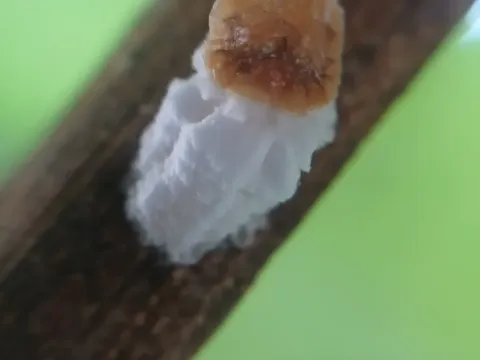
Horse chestnut scale
Pulvinaria betulae
The horse chestnut scale (Pulvinaria betulae) is a species of soft scale insect belonging to the family Coccidae. The adult female is characterized by a brown, convex body that becomes protected by a prominent white, waxy egg sac.
What the section contains
Horse chestnut scale
These white ovisacs, which resemble small pieces of cotton, are the most distinct identification feature of the pest during the late spring season. Males are rarely observed and play a minor role in the life cycle.
The immature stages, known as crawlers, are pale yellow or light brown and are very small. They possess legs and are highly active, allowing them to migrate across the plant to find suitable feeding sites.
The insect undergoes an annual life cycle, overwintering as second-instar nymphs on the bark of twigs or near the base of buds. They remain immobile during the cold months, protected by the tree bark.
Taxonomically, Pulvinaria betulae is a significant pest in both forestry and ornamental gardening, affecting various deciduous trees in temperate climates.
The pest causes damage by inserting its mouthparts into the bark and leaves to feed on plant sap. This continuous feeding deprives the host plant of essential nutrients and fluids.
Infested trees, including birch, lime, and various fruit species like apple and plum, show symptoms of stunted growth. The leaves may yellow prematurely, curl, and drop off during the summer months.
A secondary consequence of the feeding is the excretion of honeydew. This sticky substance covers the foliage and serves as a substrate for the growth of sooty mold, which impairs photosynthesis.
Heavy infestations can lead to significant dieback of twigs and smaller branches. If the pest population remains unchecked, the overall vitality of the tree declines, making it susceptible to other diseases.
In urban landscapes, the aesthetic value of ornamental trees is severely compromised due to the sticky residues and the unsightly black mold covering the canopy.
The development of the pest starts in early spring when the overwintering nymphs resume feeding as temperatures rise. During this phase, they grow rapidly to reach their reproductive stage.
By late May and June, the females mature and secrete the white, cottony egg sacs. This is the period when the infestation becomes clearly visible to the naked eye on the branches.
The eggs hatch into crawlers, which emerge during June and July. These nymphs move across the plant surface to settle in new feeding locations on the younger leaves or twigs.
By late summer, the nymphs transition into their second instar stage. They then move to overwintering sites, such as cracks in the bark or near bud scales, where they remain until the next spring.
Proper timing of pest management is crucial, specifically targeting the crawler stage before they become fixed and develop their protective waxy layer.
The most reliable sign of an infestation is the appearance of white, cotton-like masses on the undersides of twigs in late spring and early summer.
Sticky honeydew deposits on the leaves, which often attract ants and wasps, are a strong indication that scale insects are active in the canopy above.
The presence of a black, sooty coating on the leaves is a clear indicator that the honeydew has been colonized by sooty mold fungi, a common byproduct of scale insect infestations.
Weakened foliage, premature leaf drop, and the gradual dieback of young twigs are classic symptoms of severe stress caused by the horse chestnut scale.
Visual inspection of the bark reveals small, brownish, shield-like scales that are firmly attached but can be scraped off the surface of the branches.
Control strategies for the horse chestnut scale involve a combination of mechanical removal, cultural practices, and chemical treatments applied at the right moment.
Systemic insecticides applied during the crawler emergence period (June-July) are highly effective because they are absorbed by the plant and kill the insects upon feeding.
Dormant oil applications in late winter or very early spring can suffocate the overwintering nymphs by sealing the bark, providing a good foundation for pest management.
Encouraging natural predators such as ladybirds and lacewings is a sustainable way to keep scale populations below economic threshold levels in gardens.
- Prune and destroy heavily infested branches during the dormant season.
- Ensure adequate watering and fertilization to help the tree recover.
- Monitor trees regularly during early summer for crawler activity.