
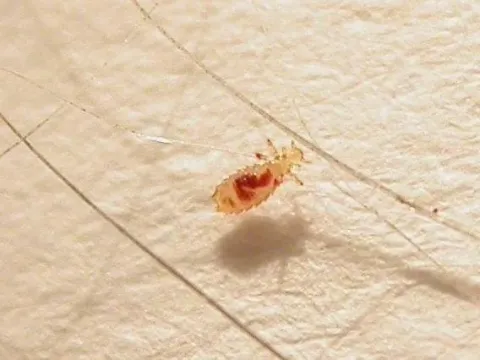
Horse biting louse
Damalinia equi
The horse biting louse (Damalinia equi) belongs to the order Mallophaga. Unlike sucking lice, this parasite is equipped with chewing mouthparts, which it uses to feed on epidermal scales, skin secretions, and hair fragments.
What the section contains
Horse biting louse
Adult lice are small, wingless insects, typically about 1.5–2 mm long. They possess a flattened, brownish-yellow body with dark transverse bands across the abdomen, making them well-camouflaged against the horse's coat.
The life cycle consists of three stages: egg (nit), nymph, and adult. The entire life cycle occurs on the host, with eggs being cemented to individual hair shafts near the skin, where the temperature is optimal for development.
Development from egg to adult takes approximately three to four weeks. Because the entire cycle is host-dependent, the survival of the species relies on constant contact between animals or exposure to contaminated grooming equipment.
These parasites are highly host-specific, meaning they do not infest other livestock or humans. Their survival away from the horse is limited, typically lasting no more than a week in favorable environments.
Damalinia equi is a specific parasite of horses, ponies, and donkeys. While not a plant pest, it is a significant concern for agricultural operations that manage equine livestock, as it severely impacts animal welfare.
The primary damage is caused by the incessant gnawing of the lice on the skin, which triggers intense irritation and pruritus (itching). This leads the animal to rub, bite, and scratch, causing mechanical trauma to the skin surface.
Infestation manifests as hair loss, coat dullness, and skin lesions. In cases of severe or prolonged infestation, the skin may thicken and become prone to secondary bacterial or fungal infections due to constant self-trauma.
The persistent stress of irritation significantly affects the horse's condition. Animals may lose weight, show signs of fatigue, and exhibit changes in behavior, often becoming restless or difficult to handle during grooming or training.
In young or immunocompromised horses, the impact is more severe, leading to stunted growth and secondary health issues. Maintaining the coat in a healthy condition is essential for both the comfort and performance of the animal.
Infestations are most common during the winter and early spring months. The long, dense winter coat provides the perfect microenvironment for the lice to thrive, protected from external temperature fluctuations.
During colder periods, horses are often kept in stables, which facilitates transmission. Crowding in barns allows the lice to move easily from one animal to another through direct contact or shared grooming tools.
As temperatures rise and horses shed their winter coats in late spring, the parasite population naturally declines. Direct sunlight and higher temperatures are detrimental to the survival of lice and their eggs on the surface of the skin.
Summer management practices, such as turnout in open fields and natural shedding, help reduce the overall burden of the infestation. However, without systematic treatment, the parasites can survive at low levels throughout the year.
Maintaining high standards of barn hygiene is the most effective way to prevent seasonal outbreaks. Regular cleaning and disinfection of stalls disrupt the life cycle of the louse, preventing rapid population growth.
The most noticeable sign is constant rubbing and scratching. Horses will frequently lean against walls, fences, or stall partitions, showing signs of relief after scratching against hard surfaces.
Visual inspection reveals patchy hair loss, particularly along the mane, the base of the tail, the neck, and the croup. The coat may appear scruffy, matted, or thinning in these concentrated areas.
By parting the hair, one can observe the lice moving on the skin surface. They are small and relatively slow-moving, often clustered near the base of the hair shaft where they feed.
The presence of nits is a definitive indicator of infestation. These small, light-colored eggs are firmly attached to the hair shafts and cannot be easily removed by normal brushing, unlike dandruff or debris.
In advanced cases, the skin may show signs of dermatitis, crusting, or raw patches. Any persistent skin irritation should be investigated to differentiate between louse infestation and other dermatological conditions.
Treatment requires the application of effective insecticides, such as sprays, powders, or spot-on solutions, specifically labeled for equine use. It is critical to follow the dosage guidelines to avoid toxicity.
A second treatment is mandatory to break the cycle. Since most insecticides are ineffective against eggs, a follow-up application 10–14 days later is necessary to kill the newly hatched nymphs before they reach maturity.
Simultaneous disinfection of all grooming gear is vital. Brushes, combs, blankets, and saddle pads must be treated or washed in hot water to eliminate any eggs or lice that may have been transferred during use.
Quarantining new animals entering the herd is a standard preventive measure. Proper inspection before introduction to the stable environment prevents the accidental spread of parasites to healthy animals.
Good nutrition and regular grooming practices support skin health. A well-cared-for horse with a balanced diet is better equipped to resist severe parasite burdens and recover faster after professional treatment.