
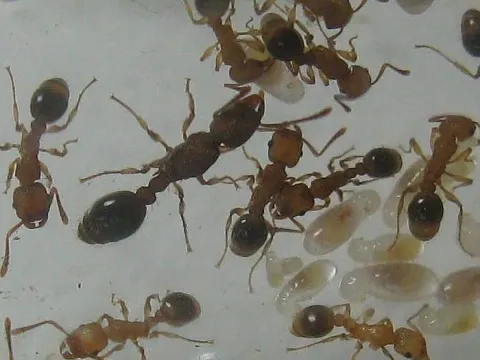
Tetramorium blochmannii ant
Tetramorium blochmannii
Tetramorium blochmannii is a species of ant belonging to the Formicidae family, subfamily Myrmicinae. These are small insects characterized by a distinct, sculpted, or rugose pattern on their head and thorax.
What the section contains
Tetramorium blochmannii ant
Worker ants typically range from 2 to 3 millimeters in length. Their coloration varies from yellowish-brown to dark brown, providing excellent camouflage within soil, leaf litter, and various organic debris found in gardens.
A key morphological feature of this species is the presence of two segments, the petiole and postpetiole, situated between the thorax and the gaster. Their heads are generally rectangular, and their antennae consist of 12 distinct segments.
These ants prefer to build their nests in well-drained, sun-warmed soil. They are often found nesting under rocks, near the root collars of plants, or within cracks in the ground, preferring to remain hidden from daylight.
Colony reproduction occurs through nuptial flights, after which a fertilized queen establishes a new colony. Established nests can contain several thousand individuals, allowing them to exert a measurable impact on the surrounding vegetation.
The primary agricultural damage caused by Tetramorium blochmannii is their mutualistic relationship with sap-sucking insects, particularly aphids and scale insects. Ants protect these pests from predators like ladybugs, ensuring their survival.
By relocating aphids between plants, ants accelerate the spread of viral and fungal diseases. Aphids produce honeydew, which ants collect, promoting the growth of sooty mold that covers leaf surfaces and inhibits photosynthesis.
Additionally, these ants cause direct mechanical damage to the root systems of seedlings and young plants. By excavating tunnels, they disrupt the soil-root contact, leading to plant wilting, stunted growth, and reduced water uptake.
Tetramorium species are known to forage on seeds. During planting season, they may remove seeds from the soil, transporting them to their nests as a food reserve, which significantly reduces the germination rate of crops.
High ant density often results in soil structural changes. Persistent burrowing depletes soil moisture around roots and can disrupt the beneficial microbial communities necessary for optimal crop development and high yield.
Ant activity begins in early spring as soon as soil temperatures reach approximately 10-12 degrees Celsius. Worker ants emerge to forage for food and prepare the nesting areas for the active summer growth period.
Activity peaks during mid-summer when aphid populations are at their highest. During this time, the colony's demand for carbohydrates is substantial, making the ants highly aggressive in guarding their honeydew sources.
As autumn approaches and temperatures drop, these ants prepare for hibernation. They migrate to deeper soil layers below the frost line, congregating in dense clusters to conserve heat and survive the winter months.
The life cycle includes egg, larva, pupa, and adult stages. Multiple generations of workers can be produced during a single growing season, ensuring continuous pest pressure on the crops throughout the warmer months.
During periods of drought, ants become particularly problematic as they seek out succulent plant parts and fruit for moisture. This leads to increased fruit damage and more frequent attacks on the softer stems of herbaceous plants.
- Presence of large aphid colonies on plant stems or leaves, accompanied by frequent ant patrols.
- A sticky, black sooty mold coating on leaves, which indicates the presence of honeydew-producing pests.
- Small, visible soil mounds or burrow entrances appearing near the base of young garden crops or ornamental plants.
- Unexpected wilting of healthy plants despite consistent irrigation, suggesting subterranean root disturbance.
- Holes or feeding damage found on soft-skinned berries and fruits, resulting from ants seeking moisture or sugar.
The most effective strategy for managing Tetramorium blochmannii is the control of their symbiotic partners, the aphids. Using systemic insecticides on plants will deprive the ants of their primary food source, causing them to abandon the area.
Mechanical destruction of nests through regular soil tilling during spring and autumn is a highly effective cultural practice. It physically disturbs the colony's infrastructure and forces the ants to relocate.
Boric acid-based baits are widely considered the gold standard for long-term control. Workers carry the poisoned bait into the colony, ensuring the queen and the brood are eliminated, which effectively collapses the nest.
Agrotechnical measures such as frequent hoeing between crop rows disrupt surface trails and discourage ants from settling. Planting repellent herbs like mint, garlic, or marigolds around sensitive beds can act as a natural deterrent.
In cases of heavy infestation, targeted applications of insecticidal gels or granules are recommended. Always apply these products along known foraging paths while ensuring they do not come into direct contact with edible plant tissues.