
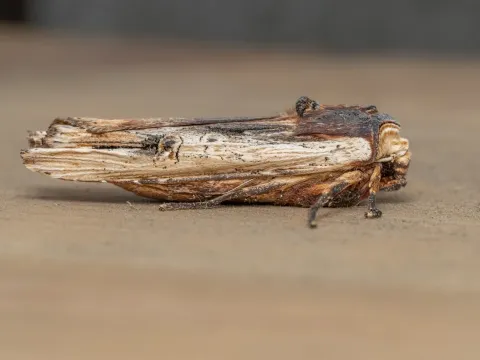
The Grey Shoulder-knot
Xylena vetusta
The Grey Shoulder-knot (Xylena vetusta) is a large moth belonging to the family Noctuidae, order Lepidoptera. Its wingspan typically ranges between 50 and 60 millimeters, featuring forewings with a mottled greyish-brown pattern that perfectly mimics tree bark.
What the section contains
The Grey Shoulder-knot
The larvae, known as caterpillars, reach lengths of 50 to 60 millimeters when fully grown. Their coloration varies from light green to brown, often adorned with pale longitudinal stripes, providing excellent camouflage on their host plants.
The pupa is brownish and forms within a loose cocoon buried in the soil or beneath accumulated leaf litter. The life cycle follows complete metamorphosis, which is standard for the Noctuidae family.
This species is notable for hibernating as an adult. This unique adaptation allows the moths to emerge early in the spring, often appearing as soon as temperatures allow, sometimes even before common spring pests emerge.
These moths are primarily nocturnal, remaining hidden during daylight hours in crevices or dense foliage, relying on their cryptic coloration to remain undetected by avian predators.
The Grey Shoulder-knot is a polyphagous pest, meaning it feeds on a diverse range of host plants. The caterpillars are particularly destructive in early spring, targeting the swelling buds and young shoots of various fruit trees.
Beyond orchards, the pest affects cereal crops, garden vegetables, and a variety of wild flora. The economic impact is felt through the destruction of generative organs, which significantly reduces the potential yield of the affected plants.
Young larvae initially skeletonize the leaves, consuming the soft tissues between the veins. As they mature, they begin to feed along the leaf margins, causing extensive defoliation that weakens the overall vitality of the crop.
In outbreak years, the caterpillars can consume a large proportion of the developing fruitlets on apple, pear, and stone fruit trees, leading to severe commercial losses for orchardists.
In nurseries, damage to apical buds is particularly detrimental, as it causes stunted growth, stem curvature, and improper crown formation, rendering young saplings unfit for sale.
The life cycle of the Grey Shoulder-knot consists of a single generation per year. The adults survive the winter by hibernating in sheltered locations, such as hollow trees, dry leaf litter, or man-made structures.
Emergence occurs in early spring, synchronizing with the bud-burst stage of deciduous fruit trees. This timing provides the newly emerged larvae with an abundant source of high-quality nutrition immediately upon hatching.
Females lay eggs on buds and twigs. Larvae hatch within approximately two weeks and undergo their primary feeding phase during the peak growth period of the spring, typically late April to June.
Pupation takes place in the soil throughout the summer months. The pupal stage lasts about a month before the new generation of adults emerges, which then typically remains inactive until autumn.
Adult moths become active again in the fall, feeding on nectar from late-blooming flowers to store energy for their upcoming winter hibernation, finally seeking out overwintering sites as temperatures drop.
The first sign of an infestation in early spring is the presence of hollowed-out or completely consumed buds on fruit tree branches. Often, tiny black frass pellets left by the larvae can be seen on the bark near the damage site.
Leaf damage, characterized by edges being pulled together and held by thin silken threads, is another clear indication of the presence of caterpillars, which use these shelters to hide during the day.
Visual identification at night is highly effective; using a flashlight, one can easily spot the caterpillars actively feeding on the shoots and foliage under the cover of darkness.
The use of light traps in the autumn can help growers monitor the population levels of adult moths. High capture rates serve as a warning to prepare for potential larval activity in the following spring.
Affected young fruit displays distinct, deep, irregular holes or scars, which are evidence of late-instar larval feeding occurring just before they migrate to the soil to pupate.
Managing the Grey Shoulder-knot requires a strategic, multi-faceted approach involving cultural, biological, and chemical methods to minimize damage during the sensitive bud-burst stage.
Cultural practices, such as autumn or early spring soil cultivation around the base of trees, are effective at disturbing and destroying overwintering pupae, thereby reducing the localized pest population.
Clearing garden debris, removing old, loose bark from tree trunks, and raking up fallen leaves significantly limits the number of suitable hibernation sites available to the moths.
Biological control options, including the application of B.t. (Bacillus thuringiensis) based insecticides, provide a targeted way to manage young larvae without disrupting the balance of beneficial insects in the orchard.
If population thresholds are exceeded, chemical control using systemic or contact insecticides may be necessary during the early spring development phases, ensuring strict adherence to safety guidelines and pre-harvest intervals.