
Thistle gall midge
Phaenobremia cardui
The thistle gall midge (Phaenobremia cardui) is a small insect belonging to the family Cecidomyiidae within the order Diptera. These midges are characterized by their fragile, small bodies and delicate appearance.
What the section contains
Thistle gall midge
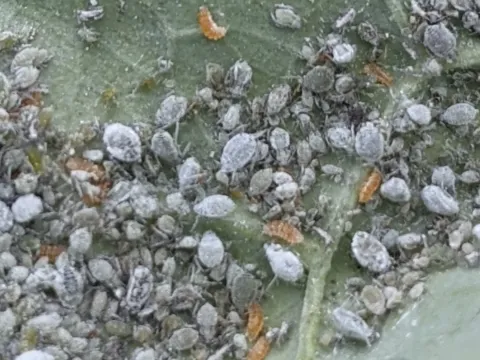
The larvae, which are typically spindle-shaped, range from light to orange-yellow colors. They lead a secretive lifestyle, either developing within plant tissues or feeding among colonies of aphids on host plants.
A significant biological feature of this species is its relationship with aphids; the larvae often act as predators, feeding on aphid populations found on thistle plants and other related weeds.
The life cycle consists of the egg, larval (with several instars), pupal, and adult stages. They typically overwinter in the pupal stage, encased in cocoons buried in the topsoil or plant debris.
Multiple generations occur throughout the growing season, with the speed of development heavily dependent on environmental temperatures and the availability of food sources.
While the larvae primarily feed on aphids, their presence on the thistle plant can induce physiological changes, such as the formation of galls or abnormal tissue growth.
These galls or deformations can disrupt the plant's metabolic processes, affecting its overall health and ability to transport nutrients effectively.
Although Phaenobremia cardui is generally considered a beneficial entomophage due to its predation on aphids, an unchecked population increase may disrupt local ecological balances.
The pest is not typically a primary threat to commercial crops, but it can influence the health of weed populations, which may indirectly affect field sanitary conditions.
Understanding the balance between their role as a biological control agent and a potential pest is crucial for integrated pest management (IPM) strategies.
The emergence of the first generation of adults usually begins in late spring, triggered by the rise in soil and air temperatures to optimal levels for metamorphosis.
Larval activity peaks during the mid-summer months, aligning with the maximum development of aphid colonies on host weeds like thistles.
Several generations can be produced in a single year, with the exact number influenced by the specific moisture levels and thermal conditions of the growing season.
As autumn approaches and day length decreases, the insects prepare for diapause, transitioning into the pupal stage to survive the winter months successfully.
Monitoring efforts often involve the use of yellow sticky traps placed in fields or near known thistle growth areas to detect the presence and density of adults.
A primary indicator of infestation is the appearance of curled or deformed leaves on thistles, often harboring colonies of aphids and midge larvae within the folds.
Close inspection of the plant often reveals tiny, mobile orange or yellowish larvae moving among the aphid colonies on the stems or undersides of leaves.
The formation of distinct galls or swelling on stems and flower heads is a clear sign that larvae have been active in developing within the plant tissue.
During the flight period, small midge-like insects can be observed in flight or resting on vegetation, particularly during dusk or dawn in humid conditions.
The decline or death of specific plant parts, along with unusual tissue proliferation, are common visual cues that the midge population is currently active.
Effective management strategies for this insect rely on a combination of cultural practices and targeted biological control methods.
- Timely mowing of thistle weeds before they reach the flowering stage to remove host plants.
- Implementing crop rotation practices to interrupt the life cycle of the pest.
- Preserving natural predators such as lady beetles and lacewings that also feed on aphids.
- Application of biological insecticides only when economic thresholds are clearly exceeded.
- Limiting the use of broad-spectrum pesticides to ensure the survival of beneficial natural enemies.