
Therodiplosis
Therodiplosis
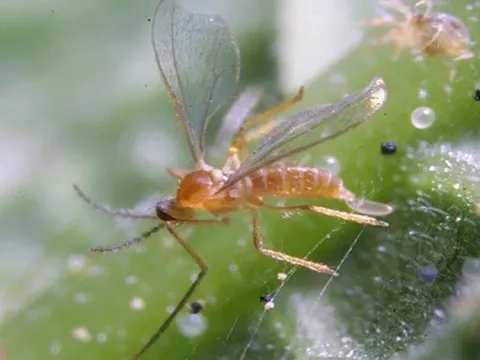
Therodiplosis is a genus of insects belonging to the family Cecidomyiidae (gall midges) within the order Diptera. These are tiny, delicate flies that are rarely observed by growers due to their cryptic habits and short adult lifespan.
What the section contains
Therodiplosis
The damaging stage of this insect is the larva. Larvae are typically legless and vary in color, ranging from white to orange. They are often hidden within plant tissues or protective galls, making early detection a significant challenge.
The lifecycle follows a complete metamorphosis: egg, larva, pupa, and adult. The adults emerge from the soil or plant debris, mate, and deposit eggs on suitable host plants where larvae can begin feeding immediately upon hatching.
Overwintering usually occurs in the pupal or larval stage in the soil or within decaying plant matter. This allows the population to survive winter conditions and re-emerge when spring temperatures provide favorable development conditions.
Identifying Therodiplosis to the species level is difficult without expert entomological analysis. Most identification in the field is based on host plant association and the specific type of tissue damage observed.
Therodiplosis species primarily attack agricultural and ornamental crops, often exploiting plants that are already stressed. By feeding on plant juices, the larvae disturb nutrient transport and growth processes.
The damage often presents as stunted growth, leaf deformation, or the wilting of stems. In many cases, the localized feeding damage serves as an entry point for secondary fungal or bacterial pathogens, complicating the diagnosis.
The economic impact of these pests depends on the infestation density. High larval counts can result in total flower or fruit abortion, leading to significant yield losses for commercial growers.
Continuous feeding on vascular tissues weakens the plant structure. Over time, this leads to chlorosis and eventual necrosis of affected tissues, causing dieback of terminal shoots and branches.
The presence of these insects is often confirmed by the associated abnormal plant growth. While they do not always form distinct "galls," the irregular swelling or tissue death is a hallmark of their feeding activity.
Integrated Pest Management (IPM) is the most effective approach for controlling Therodiplosis. Sanitation is paramount; removing and destroying infested plant material prevents the buildup of overwintering populations.
Crop rotation is a critical cultural practice. By planting non-host crops in infested areas, farmers can effectively "starve out" the localized population, breaking the lifecycle of the midge.
Chemical control should be reserved for periods of high activity, specifically targeting emerging adults or young larvae. Systemic insecticides are often required, as contact sprays may fail to reach larvae hidden deep within plant tissues.
Biological control agents, such as predatory mites or parasitic wasps, can help manage populations in greenhouses or smaller plots. Encouraging native predators can create a more balanced ecosystem.
Monitoring with pheromone or sticky traps provides essential data on population trends. This allows for precise timing of interventions, reducing the need for broad-spectrum pesticides and preserving beneficial insect populations.