
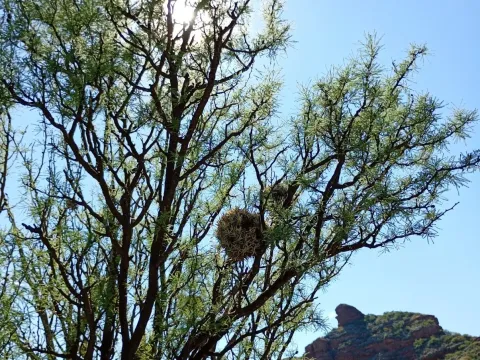
Prosopis flexuosa
Prosopis flexuosa
Prosopis flexuosa is a shrubby tree belonging to the Fabaceae family, recognized in many regions as a highly invasive and harmful plant for agriculture.
What the section contains
Prosopis flexuosa
The plant is distinguished by its zig-zagged, thorny branches and compound leaves, which allow it to thrive in arid and semi-arid environments effectively.
Its reproductive cycle involves the production of pods, which are highly attractive to local fauna, facilitating seed dispersal across large distances.
The root system is exceptionally deep, capable of reaching subsurface water, which provides a significant competitive advantage over native flora and crops.
Its ability to adapt to diverse soil types, including saline and alkaline soils, makes it a resilient plant that is difficult to eradicate once established.
This species is a major pest for grazing land, as it rapidly invades pastures, shading out and displacing nutritious grasses necessary for livestock.
In agricultural fields, Prosopis flexuosa acts as a stubborn weed that competes for water and nutrients, severely impacting the yield of row crops and cereals.
The dense thickets create physical barriers for farm machinery and increase operational costs for land clearing and maintenance of irrigation infrastructure.
The thorns cause physical harm to livestock, leading to infections and reduced welfare, which in turn diminishes the economic viability of livestock farming.
Through allelopathic effects, the tree alters soil conditions to favor its own growth, making it harder for other crops to establish themselves in the area.
Mechanical removal, such as grubbing and bulldozing, is often the first step in management, although it must be combined with follow-up treatments to prevent regrowth.
Chemical control using systemic herbicides applied to cut stumps or as foliar sprays is considered the most effective way to manage mature plant populations.
Integrated Pest Management (IPM) programs should emphasize the early detection of seedlings to prevent the establishment of deep root systems that are harder to kill.
Biological control initiatives, focusing on specialized insects that target the reproductive organs of the plant, offer a long-term strategy for population suppression.
Farmers should implement strict land management practices, including managing livestock movement and conducting regular inspections to monitor for new invasions.