
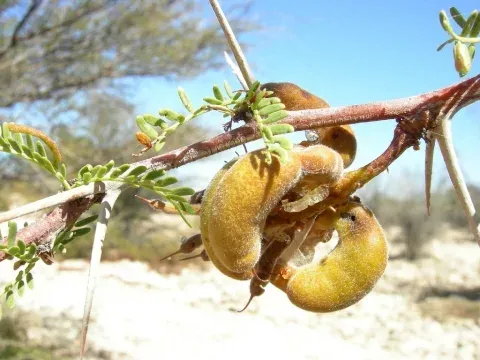
Prosopis tamarugo
Prosopis tamarugo
Prosopis tamarugo belongs to the Fabaceae family and is a tree species native to the harsh, hyper-arid environments of the Atacama Desert in Chile.
What the section contains
Prosopis tamarugo
It is characterized by its deep root system, allowing it to access groundwater at significant depths, which makes it an extremely resilient and hardy species.
The tree typically features compound pinnate leaves and can grow up to 15 meters tall under favorable moisture conditions, with a rough, fissured bark.
Its reproductive cycle involves the production of pods containing numerous seeds, which are highly durable and can remain viable for extended periods.
The plant exhibits high ecological plasticity, meaning it can adapt to various soil types, potentially becoming an invasive threat outside its natural range.
When invading agricultural lands, Prosopis tamarugo acts as a strong competitor for water and soil nutrients, negatively impacting crop yields.
In grazing areas, it forms dense, thorny thickets that prevent the growth of forage grasses, significantly reducing the carrying capacity of pastures.
The extensive root system depletes localized groundwater, leading to the dehydration and stunted growth of adjacent horticultural or cereal crops.
The presence of thorns and dense wood creates significant logistical obstacles for farmers, impeding the movement of machinery and harvesting operations.
Its ability to alter soil chemistry can inhibit the germination of native plant species, causing a loss of biodiversity in managed agricultural landscapes.
Early identification includes finding juvenile seedlings with pinnate foliage that appear in unusual densities within cultivated field edges or near water sources.
Decreased vitality of surrounding crops, evidenced by chlorosis, wilting, or reduced leaf area, is a common indicator of competitive stress caused by this tree.
The accumulation of distinct brown, woody pods on the ground or within the canopy is a clear biological marker of a mature Prosopis tamarugo presence.
A noticeable decline in the presence of indigenous grasses or ground cover under the tree canopy is a strong indicator of its invasive dominance.
Visual confirmation of the tree's bark texture, which becomes thick and greyish-brown as it matures, helps differentiate it from other non-invasive species.
Integrated management is essential, focusing on the early mechanical removal of seedlings to prevent the establishment of deep, water-seeking taproots.
For mature trees, applying systemic herbicides to the fresh-cut stump (stump treatment) is the most reliable way to prevent vegetative resprouting.
Foliar application of approved herbicides is effective on young, low-growth shoots but requires precise timing to avoid damaging non-target vegetation.
- Implement regular scouting for new infestations.
- Use heavy equipment for deep root extraction of mature trees.
- Manage livestock movement to prevent seed dissemination through manure.
Reclaiming land involves consistent follow-up monitoring and restoring native or commercial vegetation cover to keep the soil surface protected against new colonization.