
Prospaltella
Prospaltella
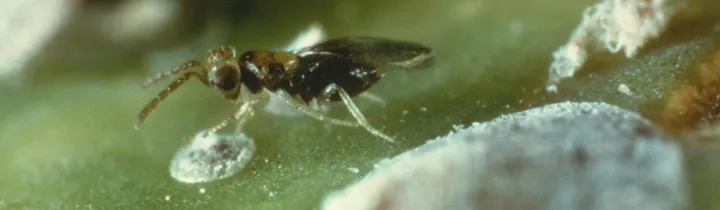
Description
How to identify
Prospaltella is a genus of parasitic wasps belonging to the family Aphelinidae, widely recognized for their role in the biological control of plant pests.
The adult insect is a minute wasp, often less than 1 mm in length, characterized by a dark body and transparent wings with specific venation patterns.
It is strictly considered a beneficial insect in modern agronomy, as it acts as a primary parasitoid for several destructive whitefly species.
The life cycle of this wasp involves the female laying eggs inside the body of a host, where the larvae feed and eventually emerge as adults.
These insects are commonly monitored using yellow sticky cards, which help track their population levels within greenhouse environments.
What it damages
Prospaltella does not inflict any damage on cultivated crops, as it does not feed on plant tissues, stems, or leaves.
Its biological purpose is to target the larvae of greenhouse whiteflies, effectively serving as a natural regulator of pest population density.
By parasitizing the larvae of destructive pests, it prevents the spread of sooty mold and other complications related to whitefly infestations.
Farmers do not view this object as a pest; rather, they manage their agricultural practices to promote its reproduction and survival.
The absence of this parasitoid in a greenhouse setting often requires reliance on synthetic chemical solutions that might be less sustainable.
When it appears
The activity of these beneficial wasps is highly dependent on environmental conditions, particularly favoring temperatures between 20°C and 25°C.
The lifecycle from egg to adult is relatively fast, allowing for multiple generations during the main growing season of the host crops.
Their activity peaks when host pest populations, such as whiteflies, are at their most active stage during the warmer months.
Under greenhouse conditions, they can maintain a continuous cycle of development throughout the year if host availability is constant.
Proper seasonal management involves protecting these populations during the transitional periods to ensure early colonization of the crops.
Signs of infestation
The most reliable sign of Prospaltella presence is the discoloration of whitefly larvae, which become dark or black after successful parasitization.
By inspecting the underside of leaves, one can observe these blackened scales, which indicate that the parasitoid is actively working.
There are no visible signs of damage to the plant host, which remains green and healthy, showing no signs of nutritional stress.
An abundance of blackened scales on leaf surfaces is a positive indicator of effective biological control and successful infestation management.
The disappearance of sticky honeydew residues is another practical sign that the parasitoids are successfully reducing the pest population.
Control measures
Control measures for Prospaltella are actually conservation measures aimed at preserving its population as part of an integrated pest management program.
It is crucial to avoid the application of broad-spectrum pesticides that may inadvertently kill these beneficial parasitoids.
When chemical intervention is necessary for other pests, selective insecticides with low toxicity to beneficial insects should be prioritized.
Maintaining a stable microclimate, particularly consistent humidity, is essential for maximizing the lifespan and effectiveness of these wasps.
- Avoid non-selective chemical pesticide applications.
- Use integrated pest management (IPM) strategies.
- Regularly monitor population levels with sticky traps.
- Maintain optimal greenhouse climatic conditions.
Discussion
No discussions yet — be the first.